You Won't Believe Your Eyes!
This One Trick Turns Dull Surfaces Into Hyper-Realistic Scenes!
The following text is generated by ChatGPT
Normal mapping is a technique used in computer graphics to add intricate details and textures to surfaces without requiring additional polygons or geometric complexity. By manipulating the normal vectors at each pixel on a surface, normal mapping simulates the appearance of complex surface details, such as bumps, grooves, and other textures. This technique allows for significantly enhanced visual richness and realism in rendered images, especially when lighting and shading calculations are involved.
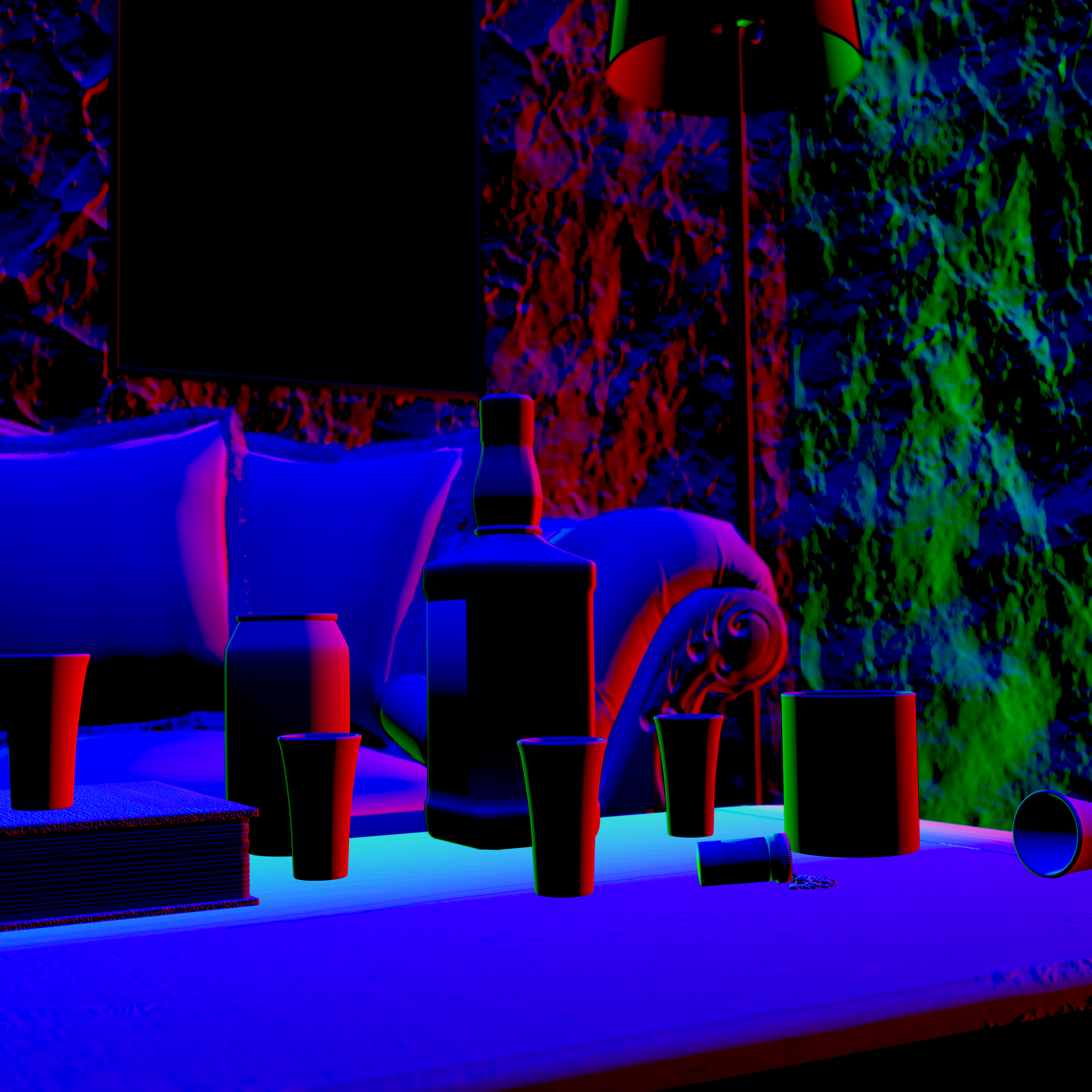
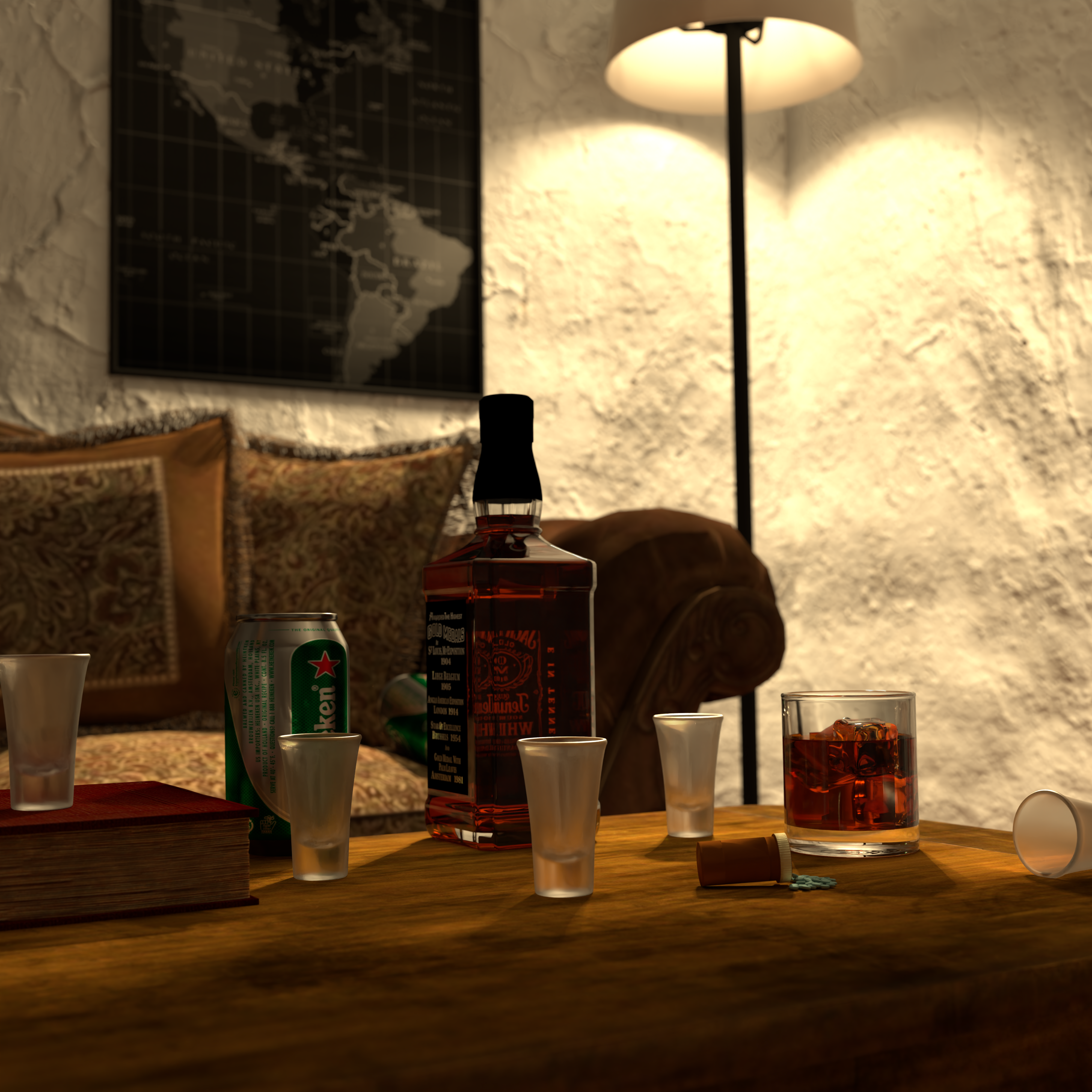
In the provided example, the first image showcases the application of a normal integrator, visually representing the surface normals of the scene. This visualization highlights the direction and orientation of the normals across different surfaces, such as walls. Each color in this image corresponds to a different normal direction, offering insight into how textures and details are encoded at a per-pixel level through normal mapping. The second image, rendered with a pathtracer, demonstrates the practical effect of these manipulated normals on the scene's lighting and realism. Thanks to the normal mapping on the walls, we observe nuanced light effects that mimic the interaction of light with a textured surface. The lamp in the scene casts light that interacts with these detailed textures, creating shadows and highlights that convey a sense of depth and material complexity. This results in a more lifelike and visually rich image, where the intricate interplay of light and texture enhances the overall realism of the scene. The contrast between the two images underscores the critical role of normal mapping in adding visual complexity and realism to computer graphics without the need for geometric detail.