Final Render
Solved Shot by Karl Pham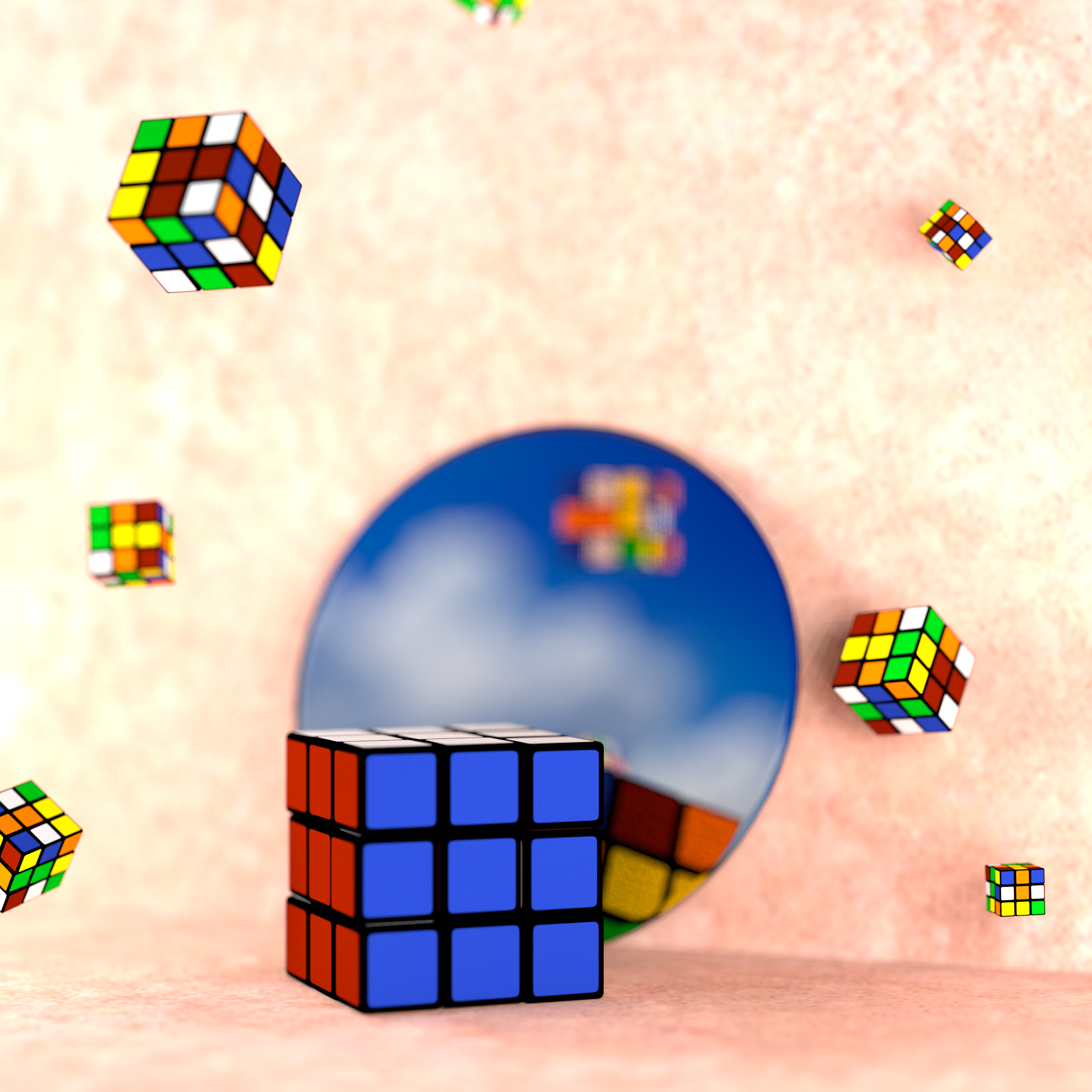
Theme Chaos in Harmony
A solved rubik's cube shows the concept of "chaos in harmony", as there is only one solved state out of over 43 quintillion possible. The possible unorder is portrayed by the multiple scramled cubes in the surrounding. Their different locations, rotations and scales enhance the chaos. Even the scrambled reflection of the solved cube reflects more chaos.(pun intended) However there are things that are not random, the unusual quadratic 1:1 aspect ratio for example resembles the face of one side of the cube. Further the cubes are spread evenly, such that there's roughly about one cube visible in every 3x3 grid of the image. Everything perfectly aranged for a perfect shot, a "Solved Shot".
Features
The following features have been implemented. The left image when comparing two images, is always the first one/the one on the left.Halton Sampling
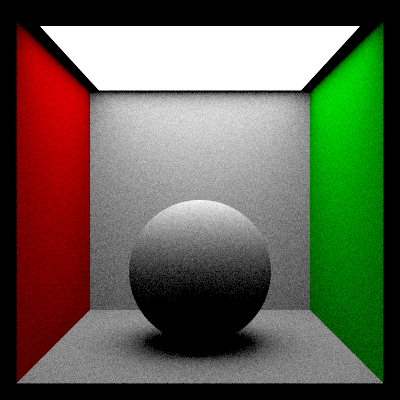
The Halton sampling is a low-discrepancy sequence which can be used to reduce noise.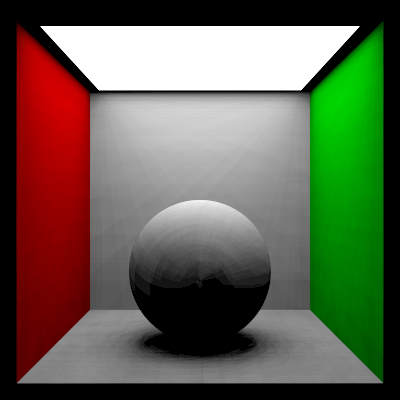
Denoising
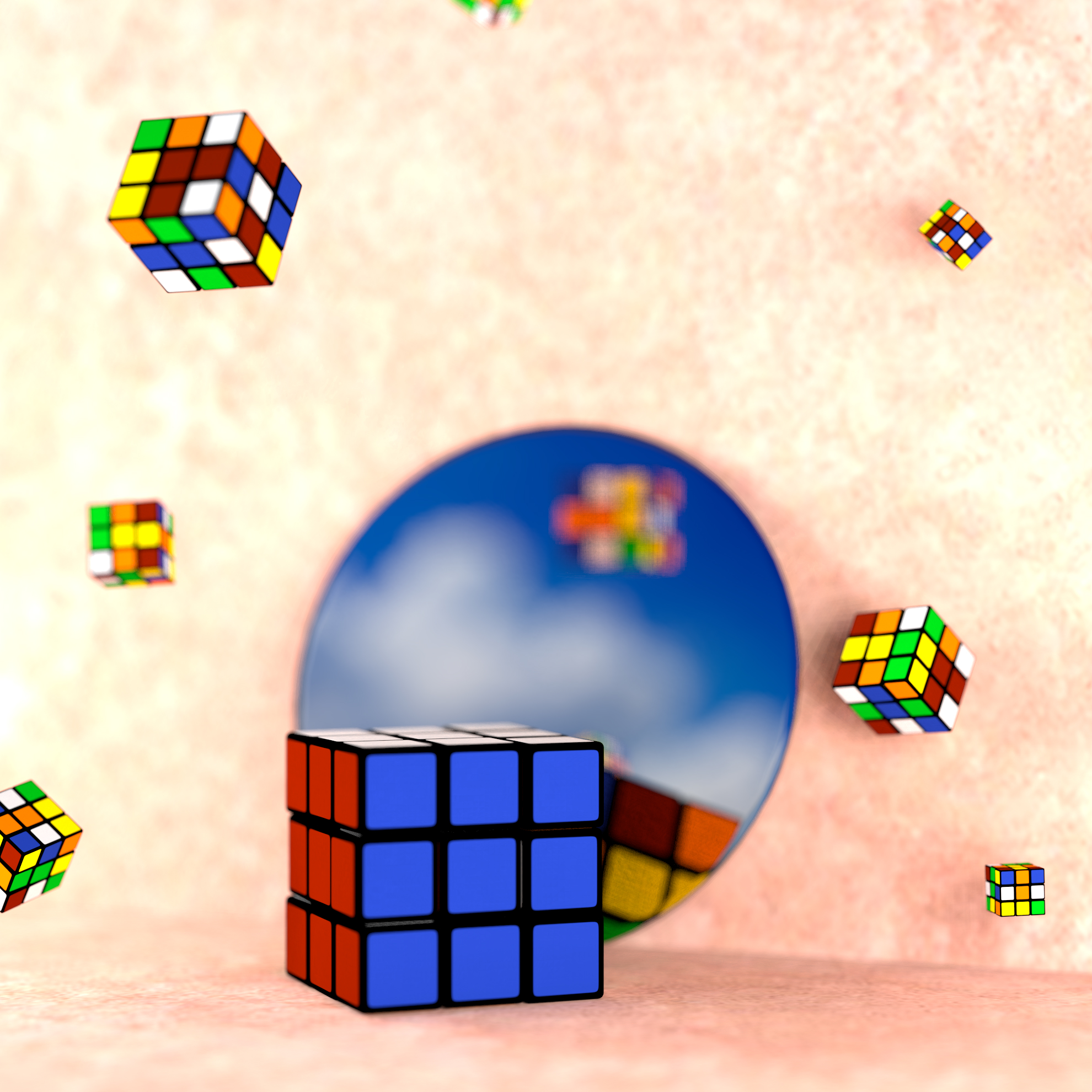
Probably not really important anymore, as the Halton sampling reduces the noise. You probably can't tell the difference.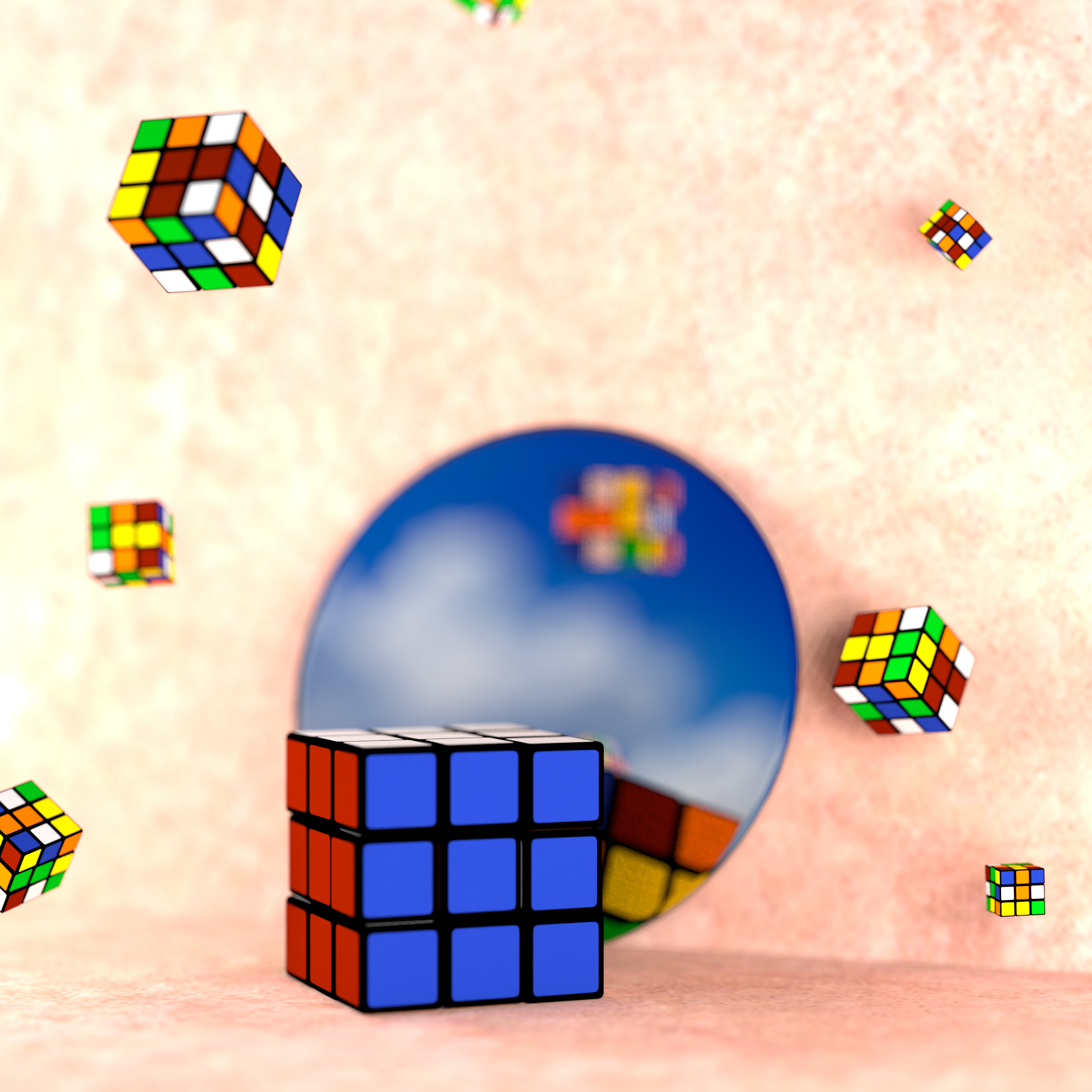
Thinlens
Probably the most noticeable feature in the renderer.(So no need to put additional images) The thinlens helps to keep the solved cube to be more in focus, as some of the rest gets blurred. Also it adds another layer of "randomness" to the unsolved cubes, as they have varying distances the blur is different for each of them. Furthermore it adds some more realism to the shot.Area Light
Area lights allow some more realistic soft shadows. However the most visible shadow in the scene has some Halton sampling artifacts. Modelling them with a emissive shape, that requires to be hit, is very noisy for smaller area lights.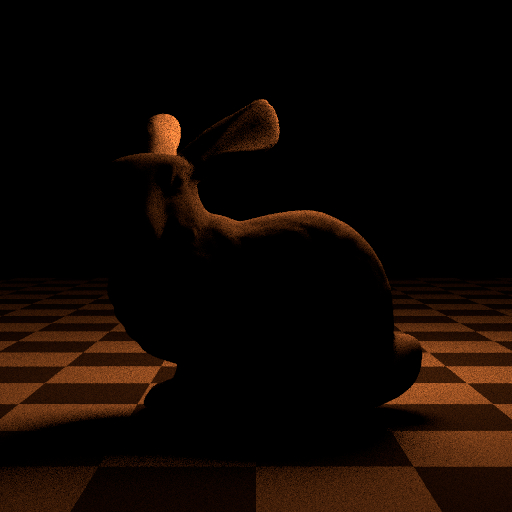
Shading Normal
Shading normals allow to add more details without increasing the complexity of the underlying geometry.