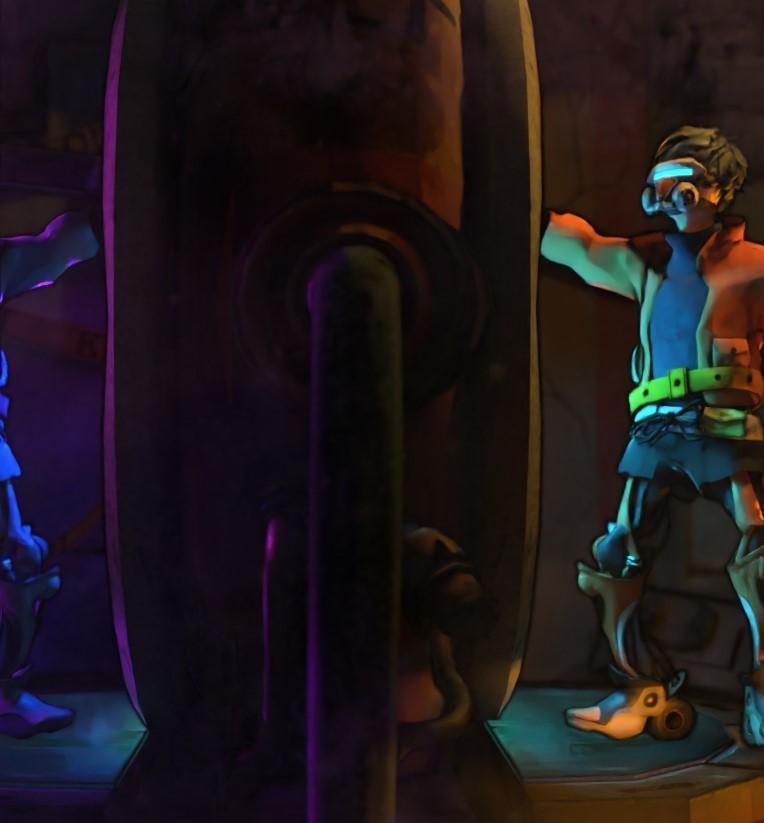
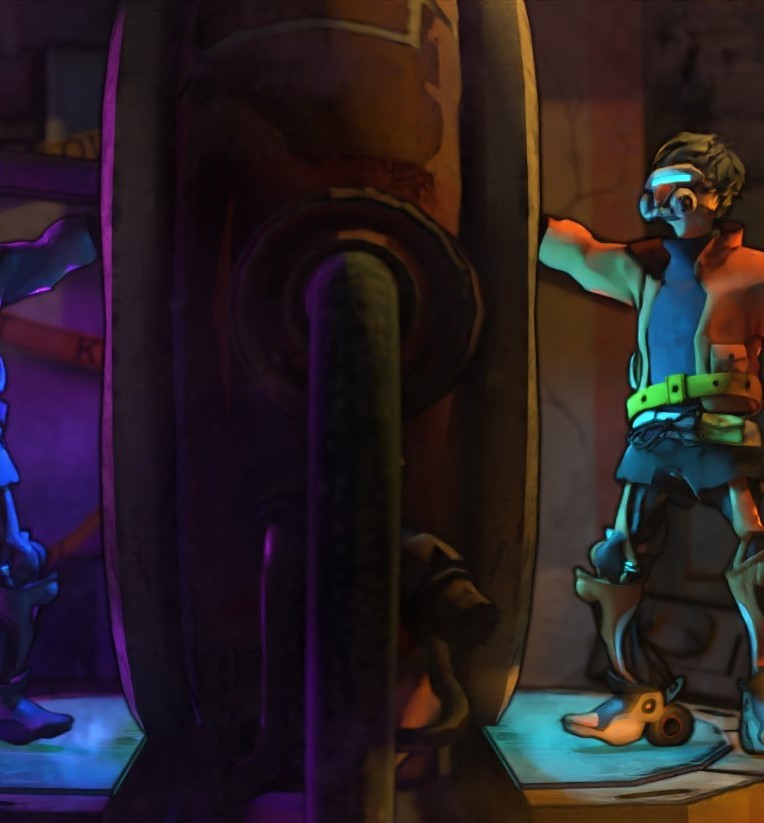
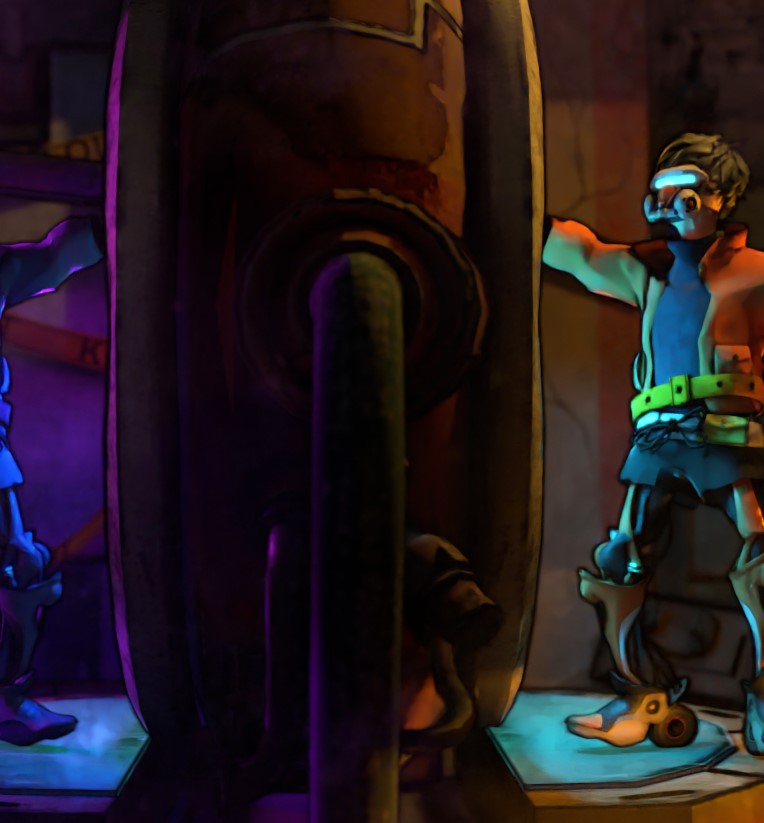
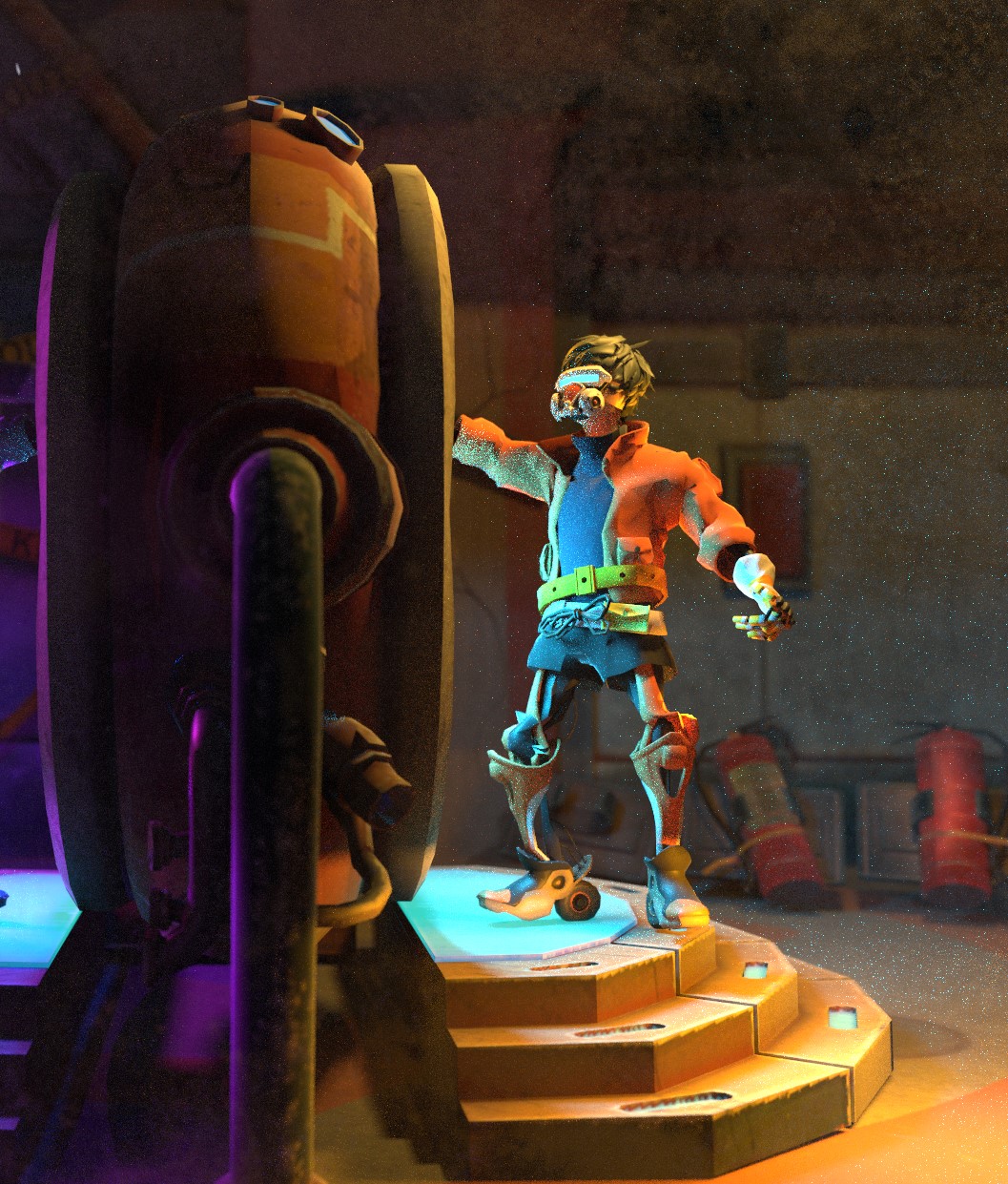
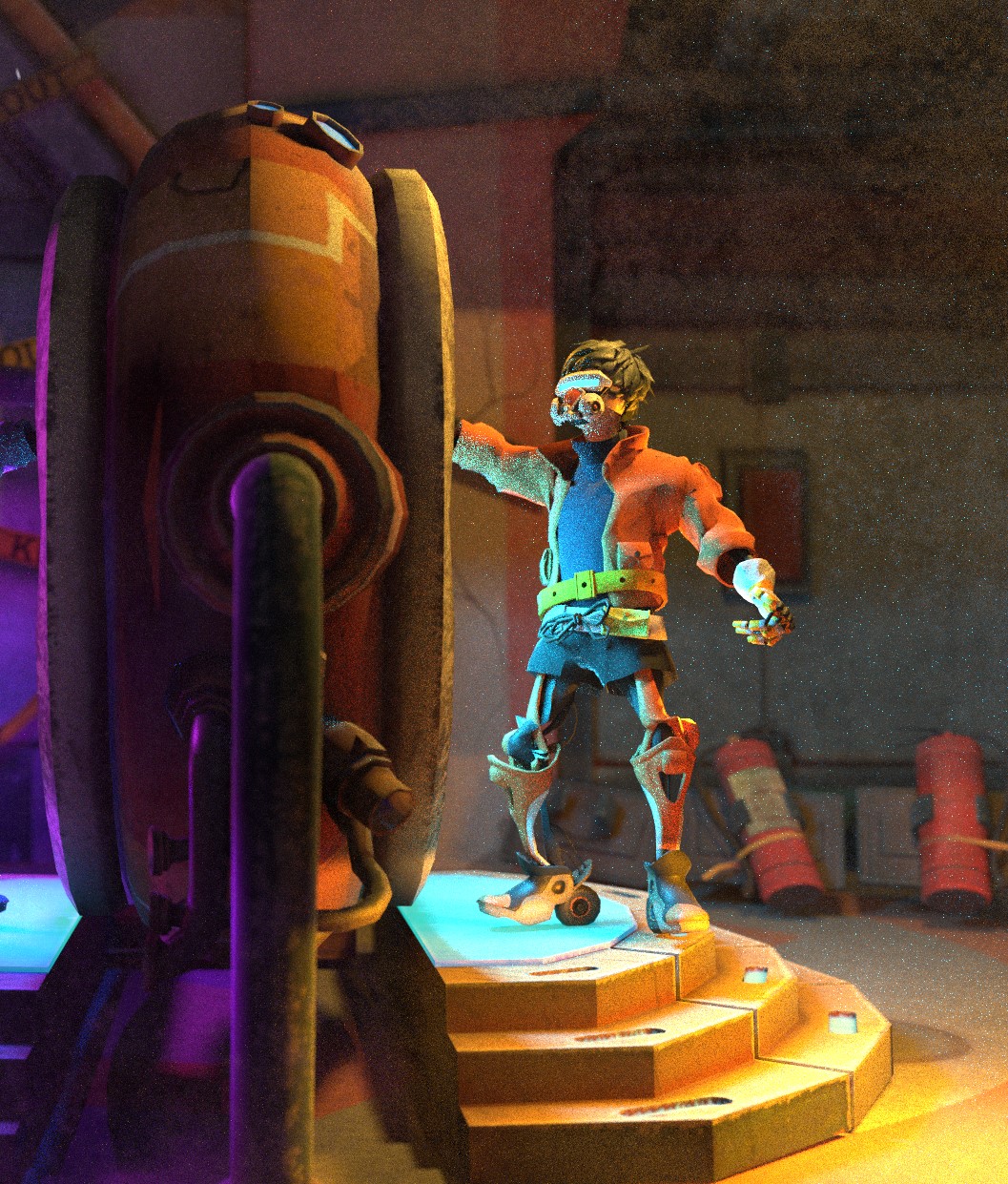
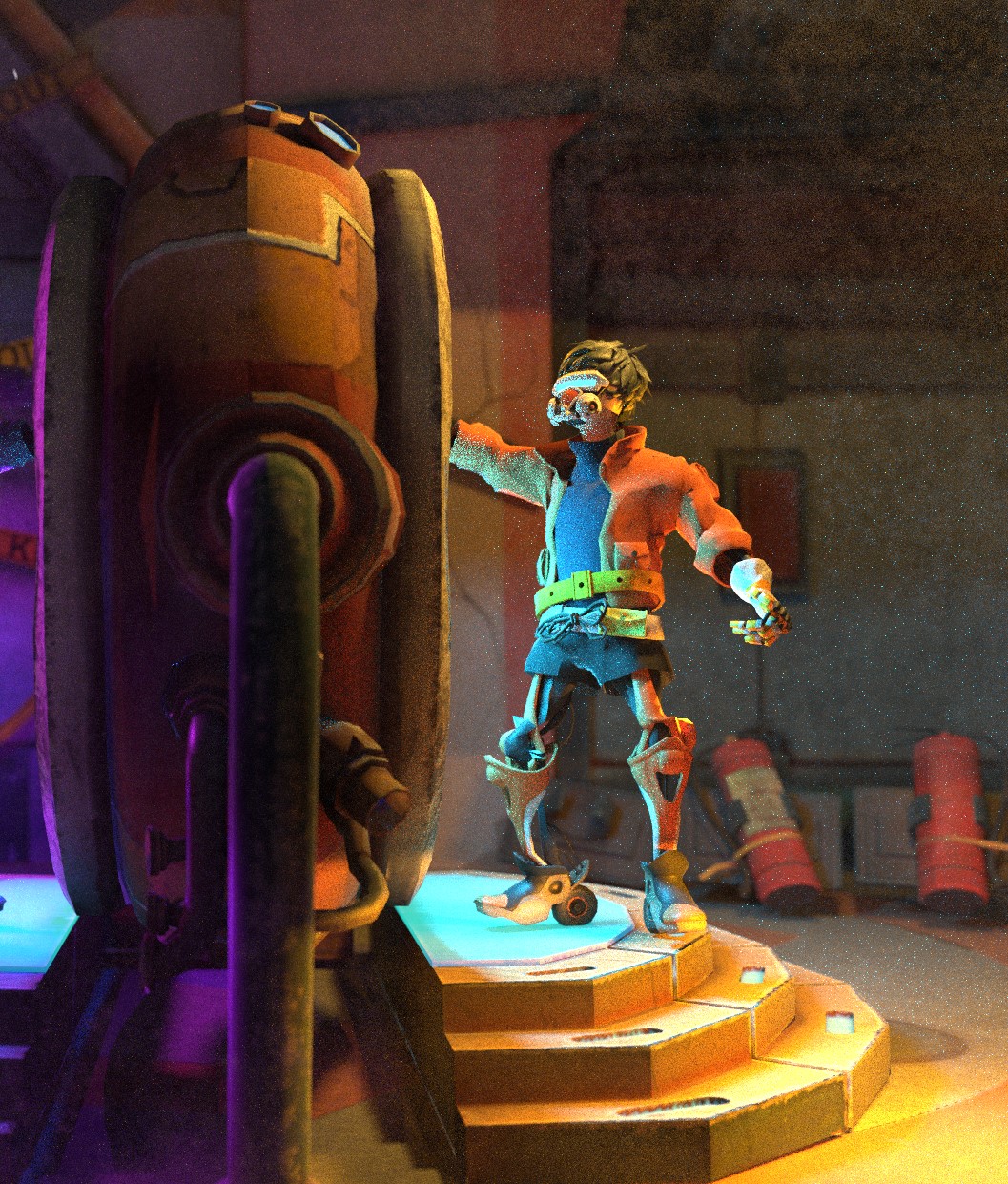
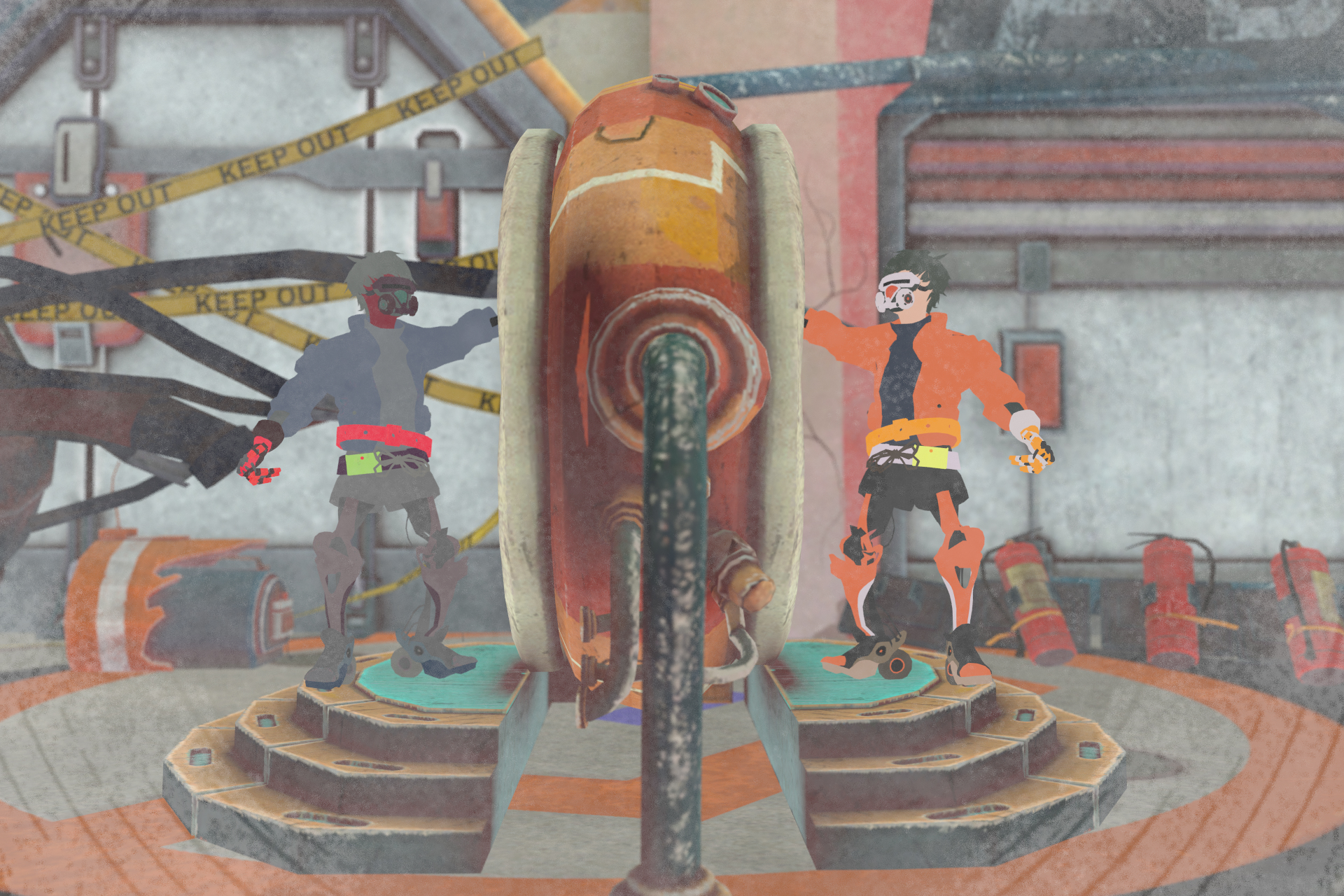
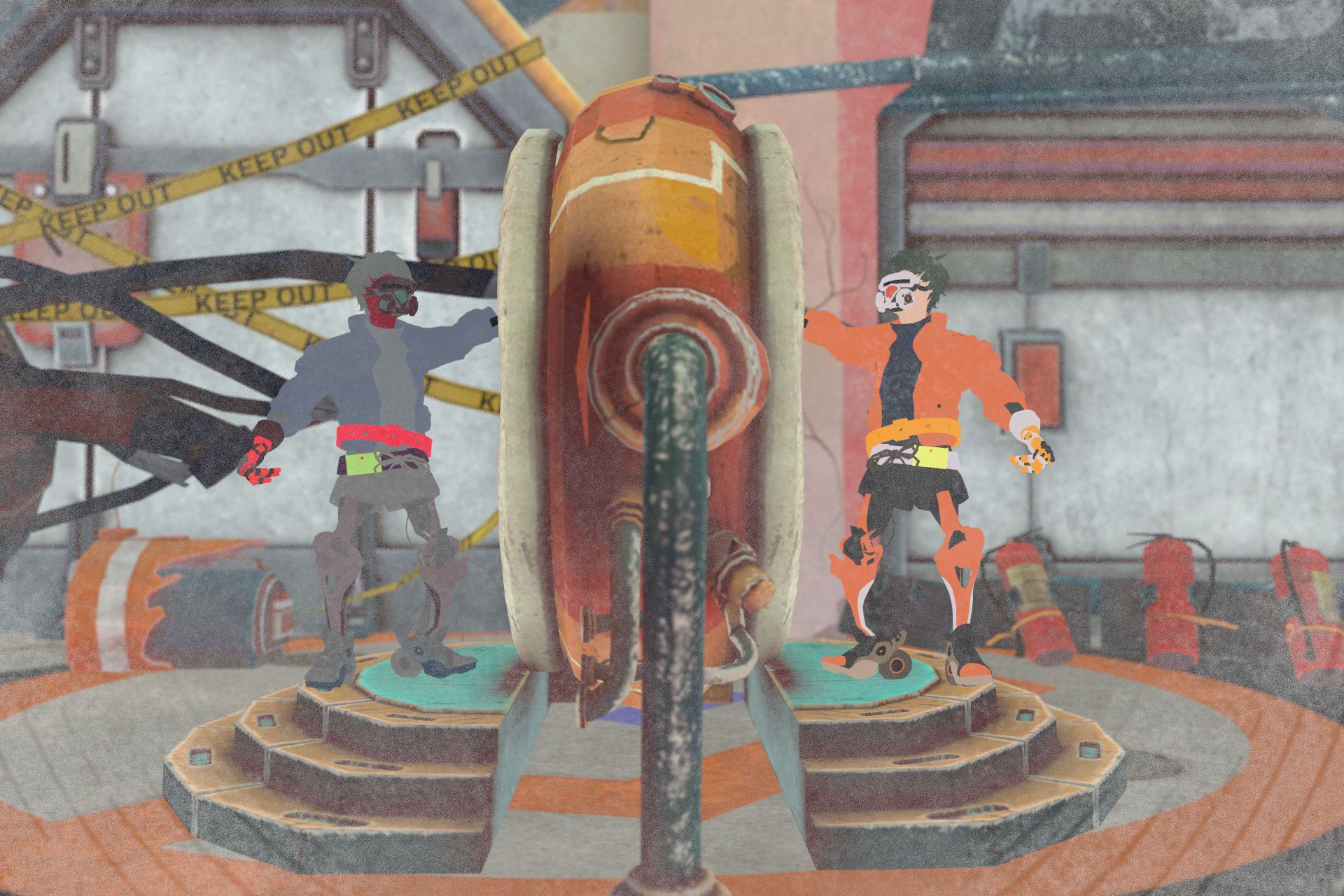
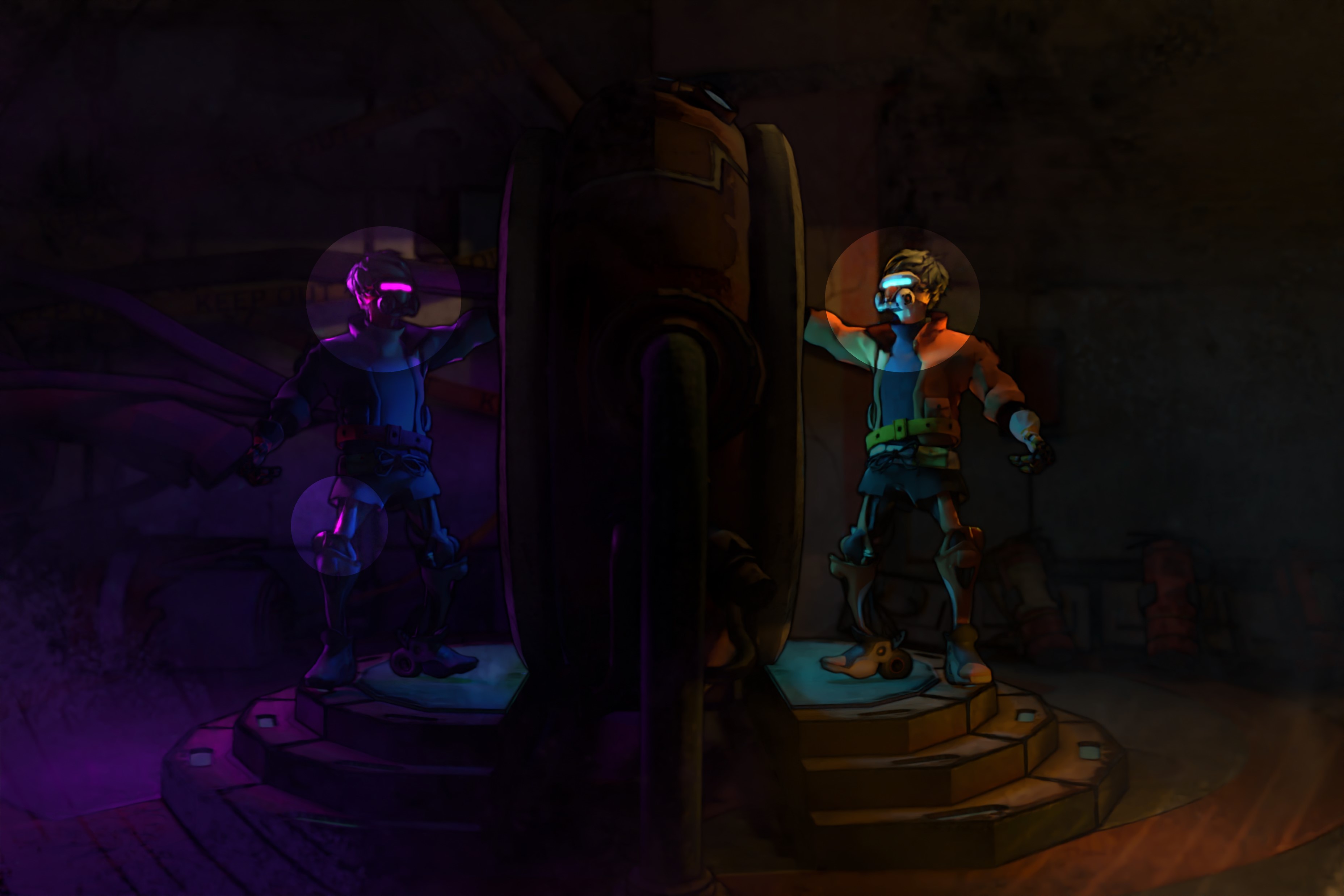
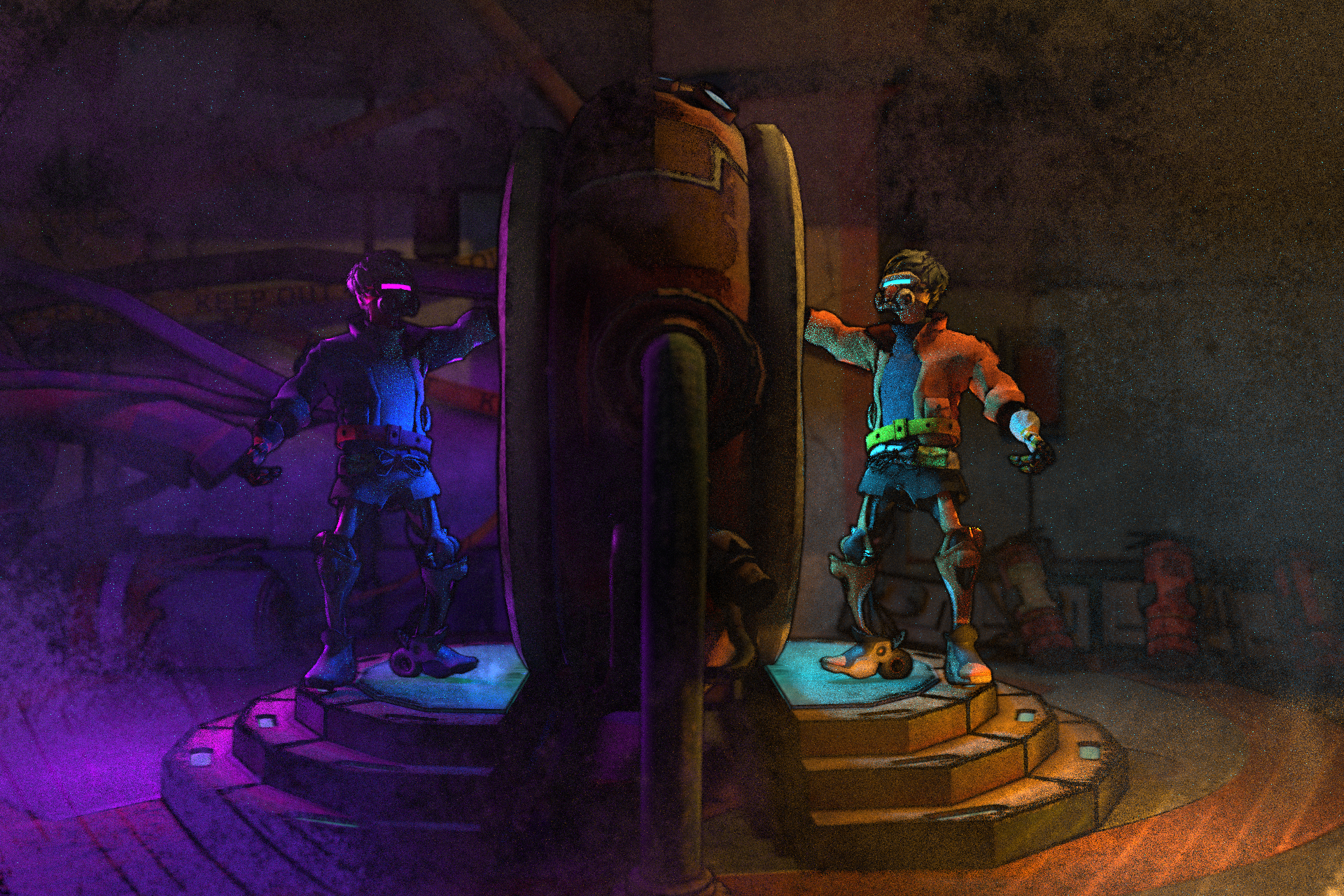
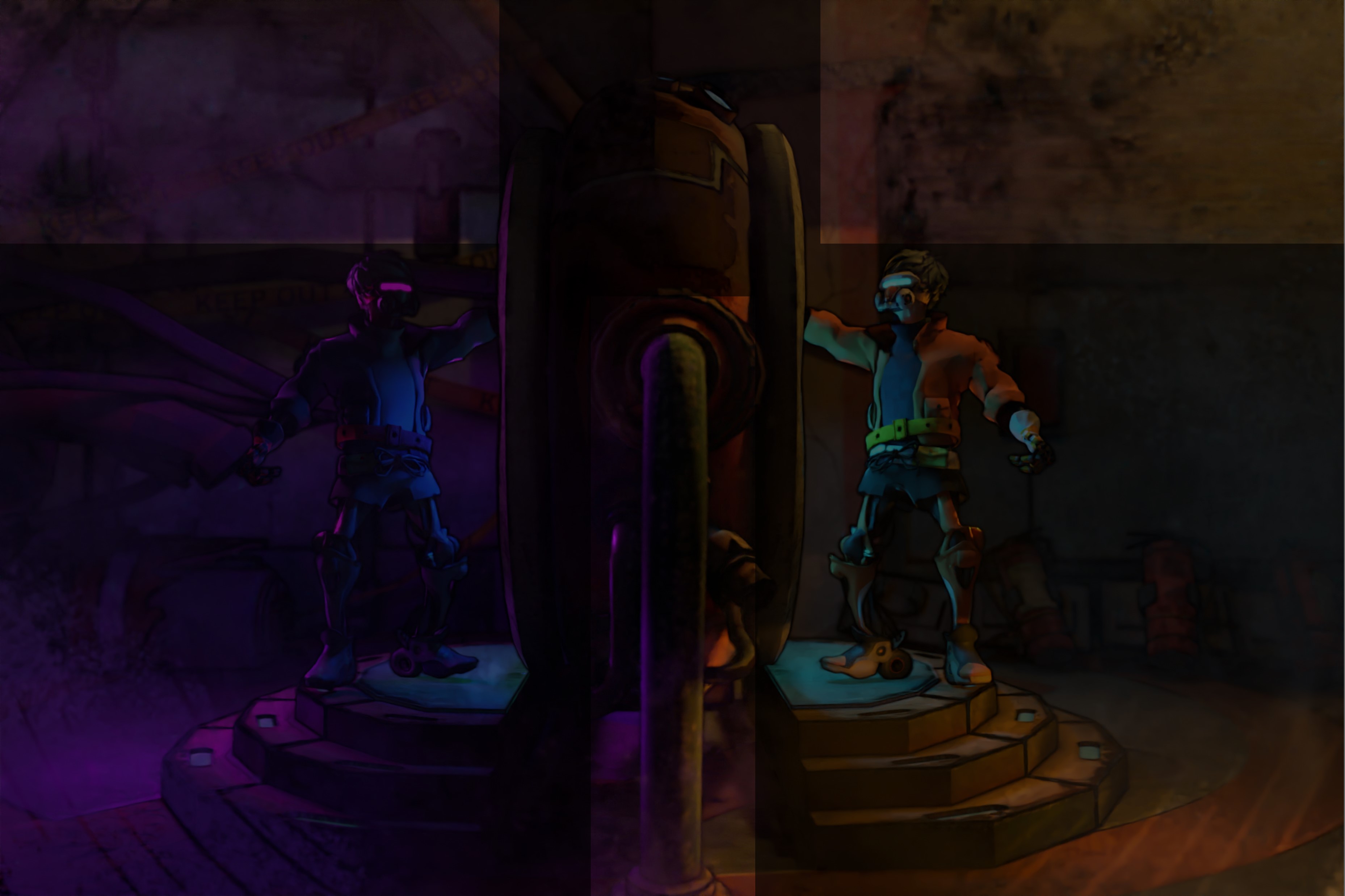
In the quest for a lost city, M stumbled upon an astonishing find—an active transmitter hidden within the ruins. Caught between reporting the discovery and succumbing to the allure of personal exploration, M grappled with a decision poised to reshape destiny. The dance of caution and curiosity heightened as M envisioned the mysteries on the other side.
Unbeknownst to him, a mysterious counterpart, M*, awaited, ready to claim not just M's life but his identity.
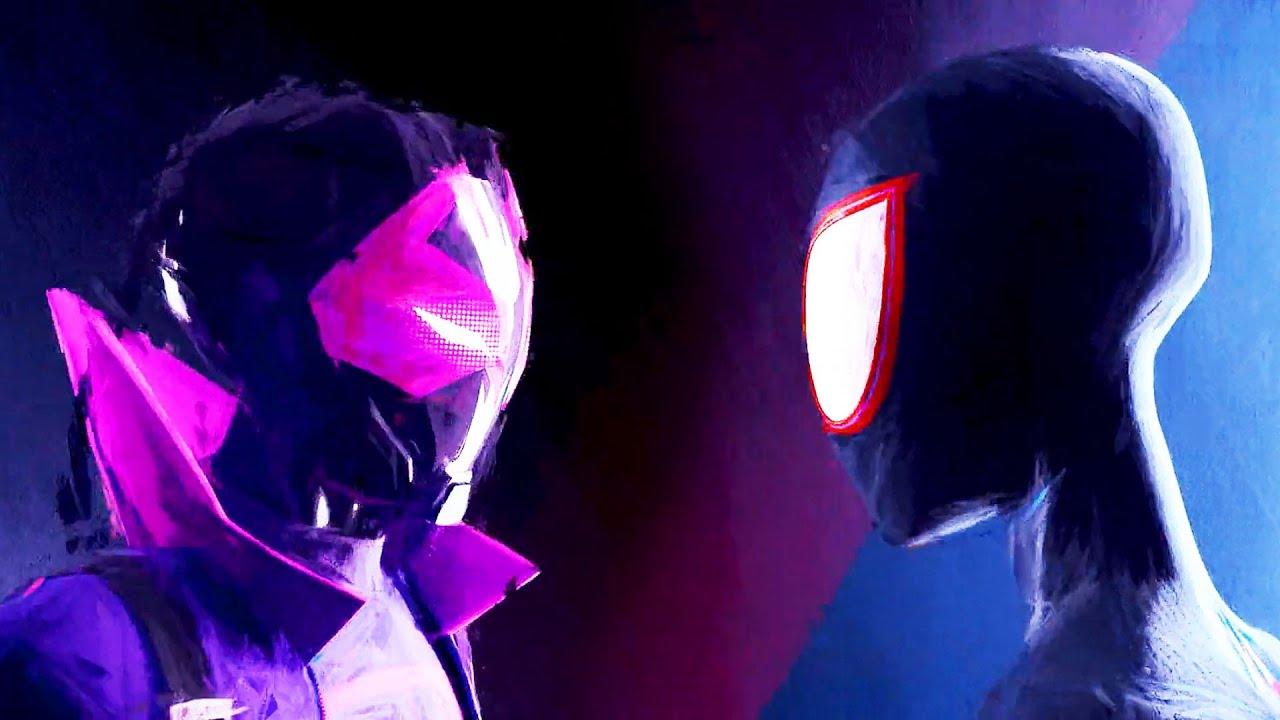
Step into the immersive world of the scene design, where three pivotal elements—feature line, nuanced lighting, and evocative smoke—converge to craft a cinematic scene.
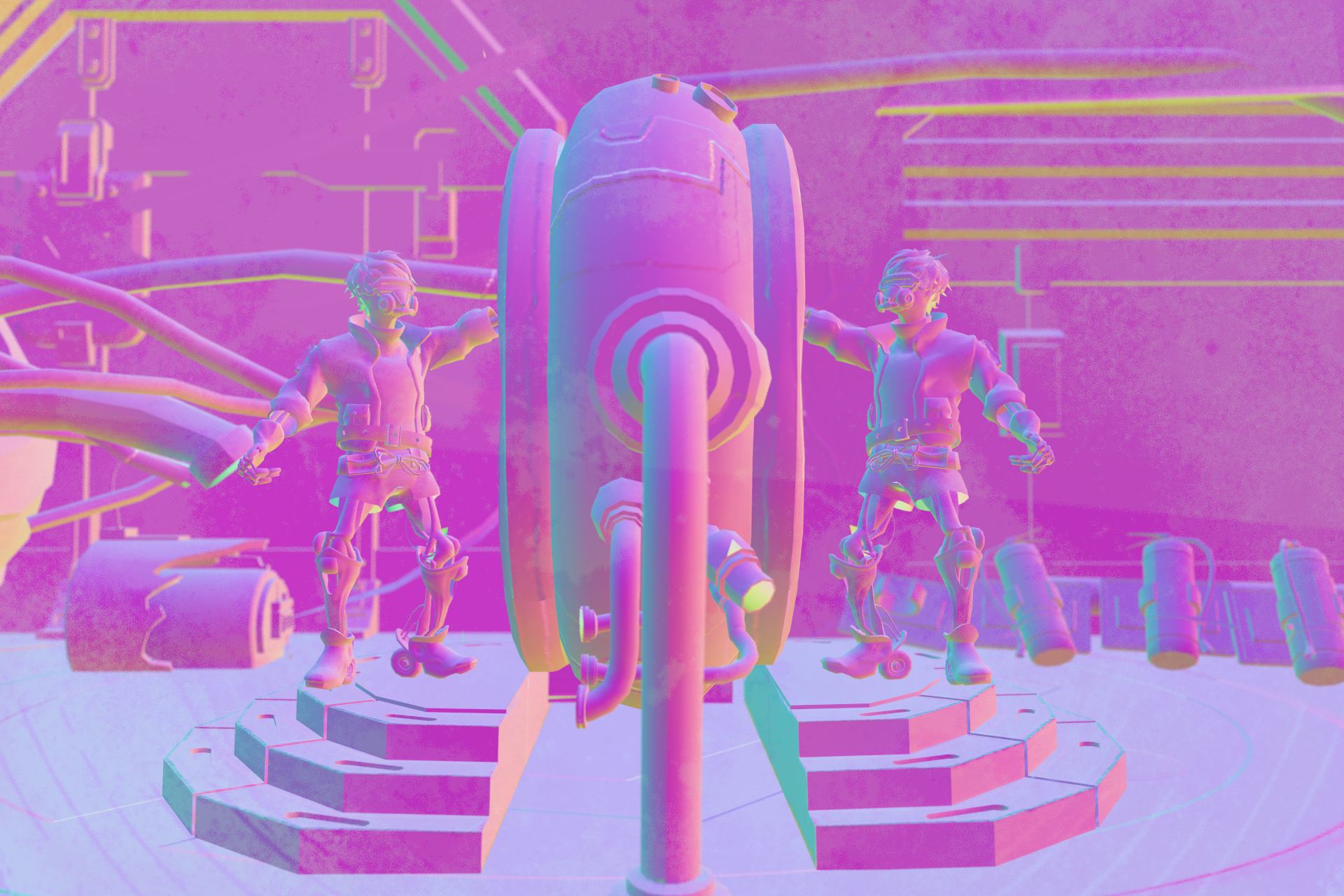
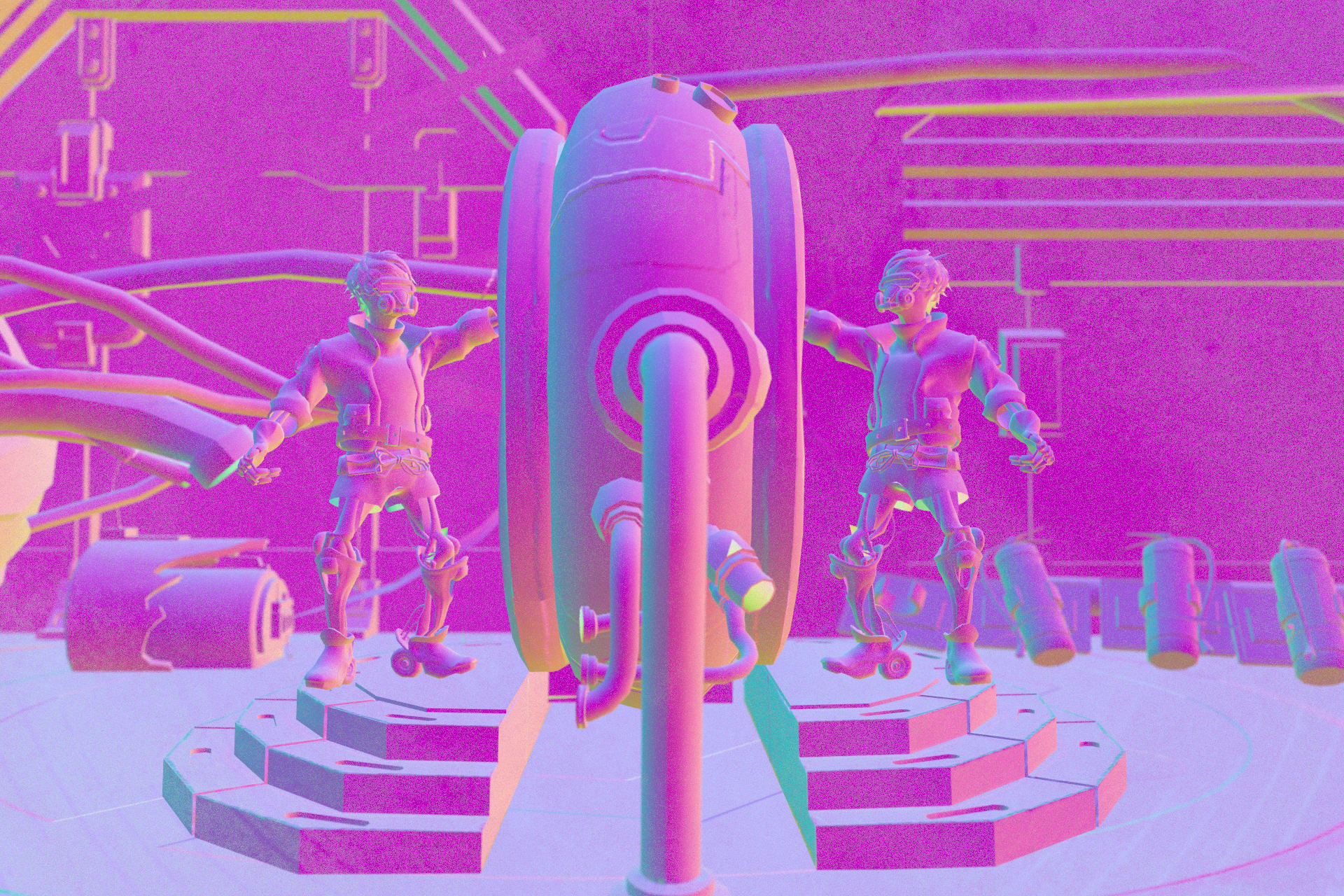
The interplay of two worlds unfolds through carefully curated lighting tones, character textures, and distinct backgrounds. Meanwhile, the gaze is skillfully guided towards the central character through the artful use of blooming and rim lights which delicately outlines characters. And the dramatic presence of smoke, reminiscent of gunpowder, hints at an unknown battle.
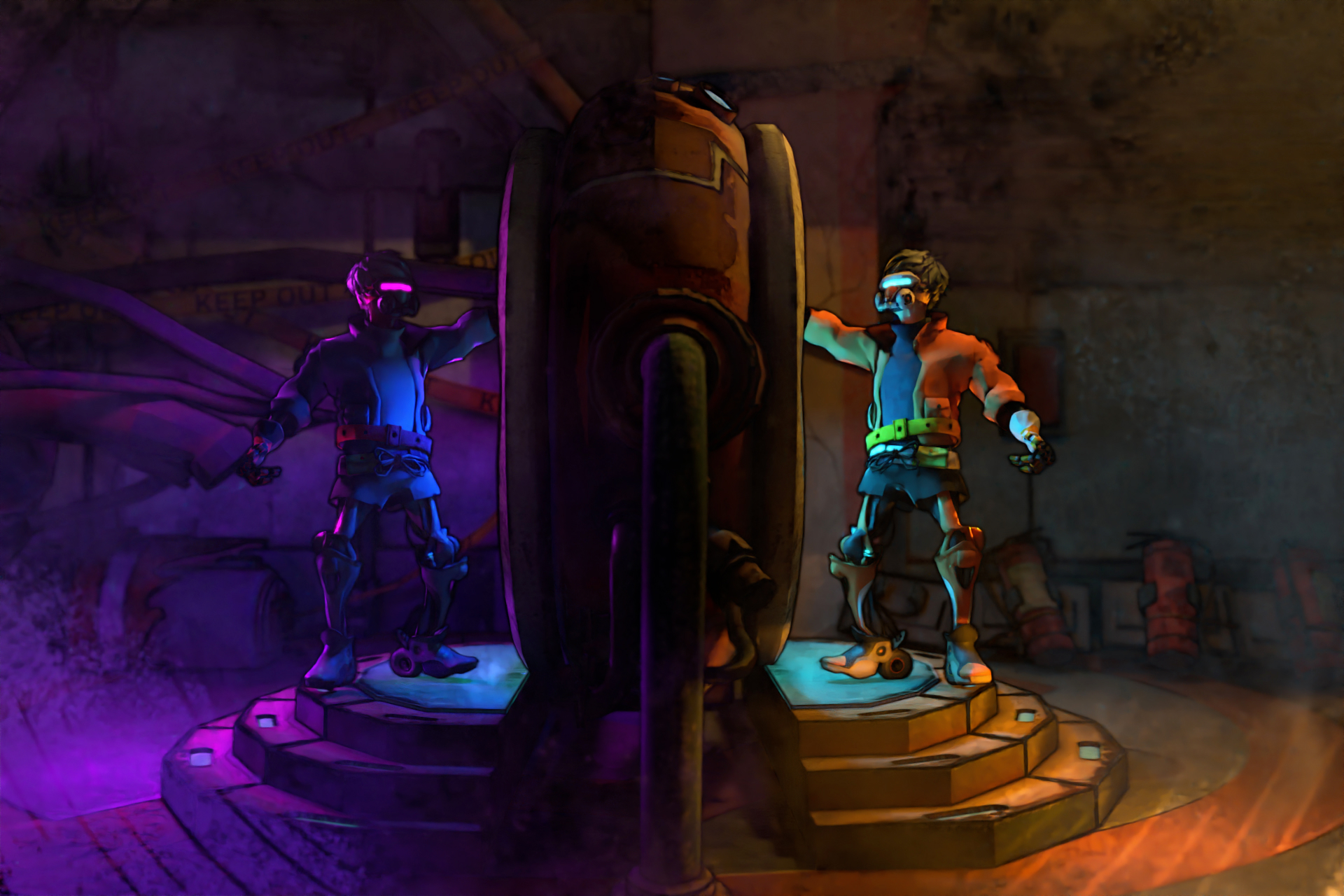
1
Resolution
1920 × 1280 (3:2)
Faces
92,498
Samples
Approximately 400 * 7, by including feature line detecting, for each pixel, we need extra samples to detect whether it's line. More details will be covered in the feature discussion.
Render Time
3 h 5 min
CPU
i7-12700H, 14 Threads
Lights
5 area ligths, 8 point lights, 1 envmap
2
Physically-based feature line, "smoke"
3
Shading Normal, Alpha Masking, Halton Sampler, Bloom, Image Denoising, Basic Area Light Sampling, OcclusionRoughnessMetalic Texture, Thin Lens
The entire experience can be broken down into two stages:
1) ideation and placement of 3D models
2) arranging lighting and smoke
The objective of this design is to simulate a cinematic shot or poster, inspired by the idea of depicting two worlds—one with feature line and the other without. However it's challenging for me to blend elements with different shading techniques naturally.
An alternative, more feasible approach involves portraying two worlds under the same shader but with distinct color settings, including character appearances. This idea is inspired by Yudhistira who also helps manipulate the poses and the reverse texture. Different backgrounds are also introduced to signify the unique identities of two characters.
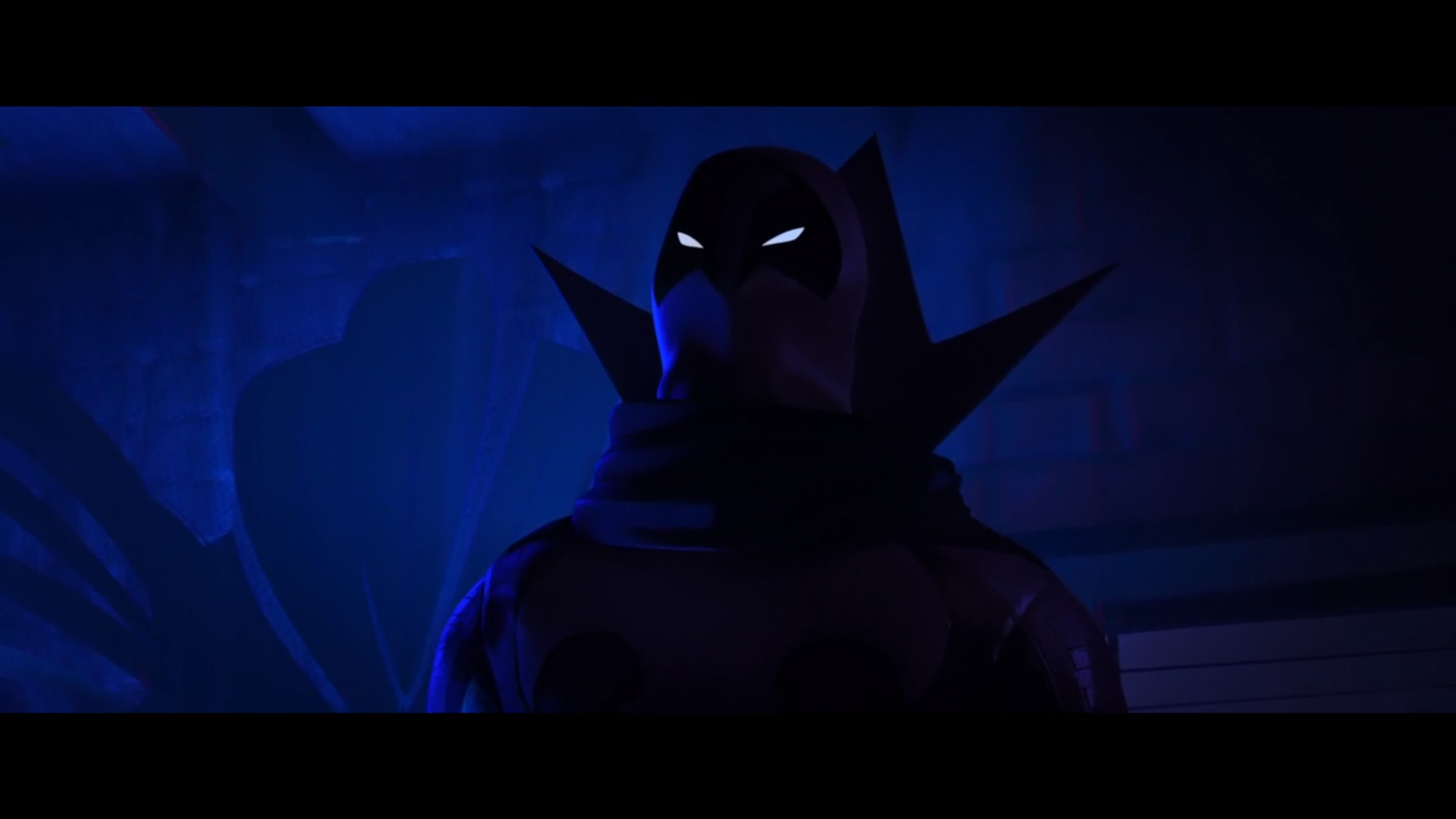
Regarding lighting, to evoke a cinematic ambiance, I turned to Pixar's lighting tutorial and implemented some basic techniques. For example, approximately 8 point lights were carefully placed as rim lights, outlining characters against the background. The lighting for the evil version drew inspiration from various shots in the Spider-Verse.
Smoke also plays a pivotal role in the design. Even with proper lighting, the scene lacks dynamism without smoke, as everything appears somewhat static and lacks a storytelling element. Smoke becomes instrumental in infusing life and narrative depth into the composition.
Assets of the Scene
Special thanks to Fangqing Wang and Lingxiao Zhang for all the 3D models used in the scene.
Lingxiao Zhang,    786960158@qq.com
Fangqing Wang, 1320493878@qq.com
Environment map is courtersy of Greg Zaal
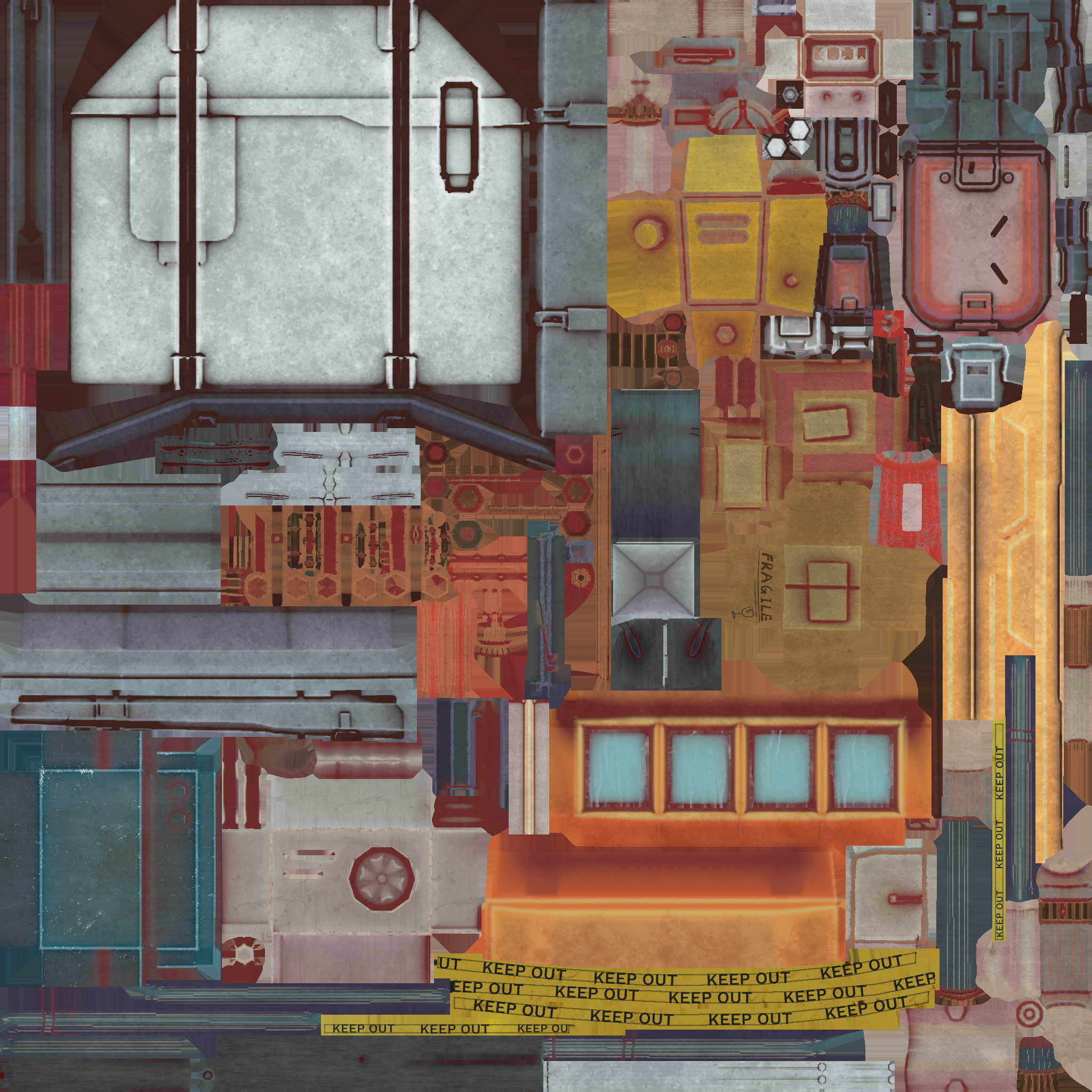
Alpha mask
Others
Template of the website is courtesy of Ahmed Essa
Feature Inplementation
Physically Based Rendering: From Theory To Implementation by Matt Pharr, Wenzel Jakob, and Greg Humphreys.
Physically-based Feature Line Rendering by Rex West. Also thanks for Philippe's recommendation of the reference.
Inspiration for the Scene
Pixar in a Box in Khan Academy. Techniques for lighting.
Movies of Spider-Man: Into the Spider-Verse, Spider-Man: Across the Spider-Verse, Monsters Inc., Monsters University.
I would like to express my heartfelt gratitude to the CG teams, with special thanks to Alexander Rath, Philippe Weier, Eric Windholz, and Prof. Dr.-Ing. Philipp Slusallek, for their unwavering support, guidance, and expertise that enriched our learning journey.
Additionally, my sincere appreciation goes to my teammate, Yudhistira, for his exceptional collaboration on our assignment and final project. Despite the substantial workload on the features, he brought a wealth of brilliant ideas to the table, contributing significantly to the creativity of our work.
Yudhistira Yoga Semeru
Email: yuse00001@stud.uni-saarland.de
Lianjia Liu
Email: lili00002@stud.uni-saarland.de
Ps. Although we share the same features, our ideas diverge towards the final scene. It's hard for us to decide which one to choose becasue each one incorporates unique elements we are reluctant to discard. So we ended up submitting separately.
© 2024 Lianjia Liu