The Hidden Road Ahead
Ben Dierks and Jannik Nau
Ben Dierks and Jannik Nau
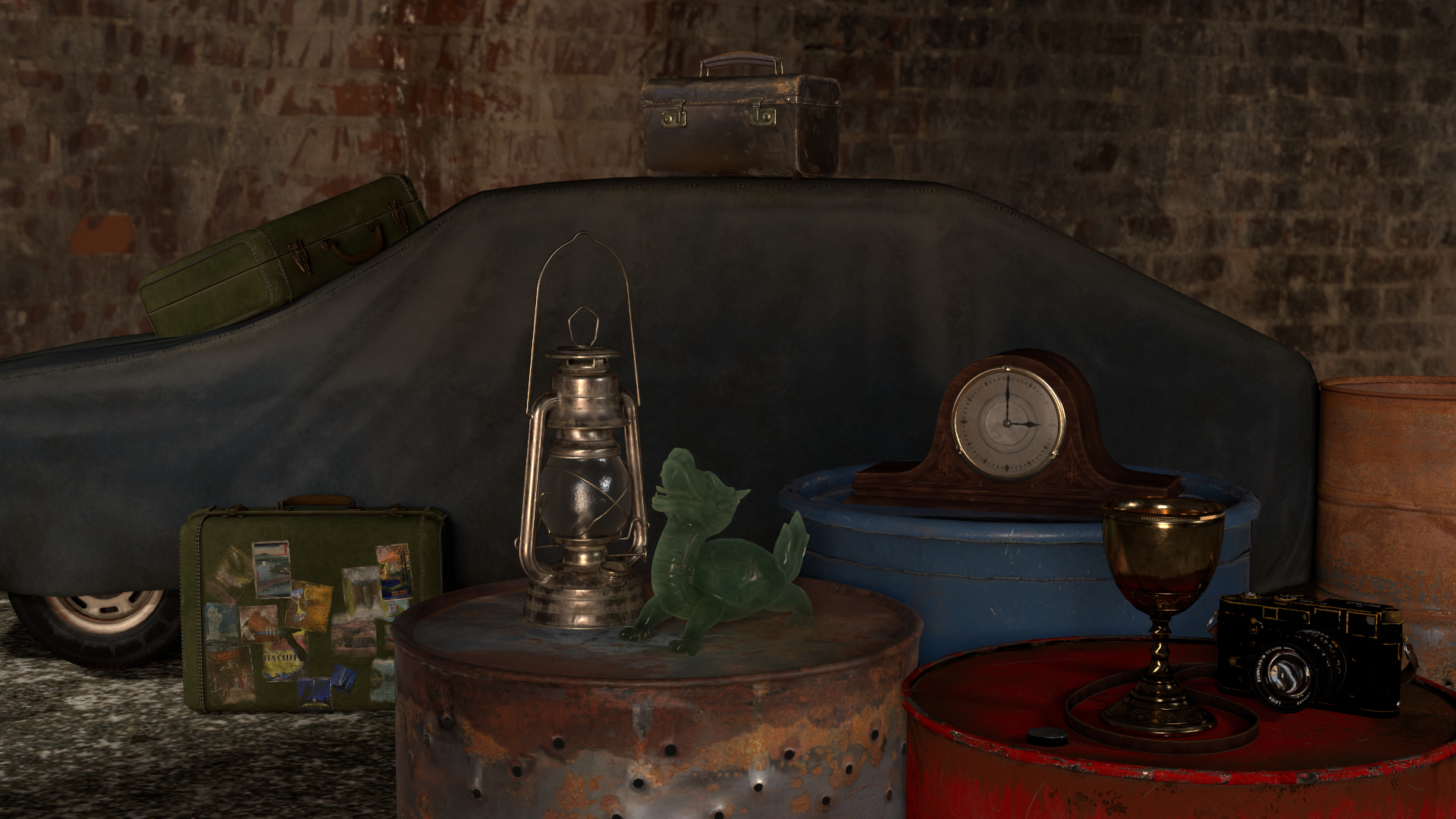
Our scene fits the theme through powerful symbolism and composition. The suitcases symbolize travel and exploration, while the old covered car and run-down warehouse add an element of mystery and nostalgia. Ambiguous lighting enhances the sense of anticipation and uncertainty. Through careful selection, arrangement and composition of exotic models, the image invites viewers to imagine the adventures and discoveries that lie ahead. Overall, it effectively captures the essence of venturing into uncharted territories, inviting viewers on a visual journey of exploration and imagination.
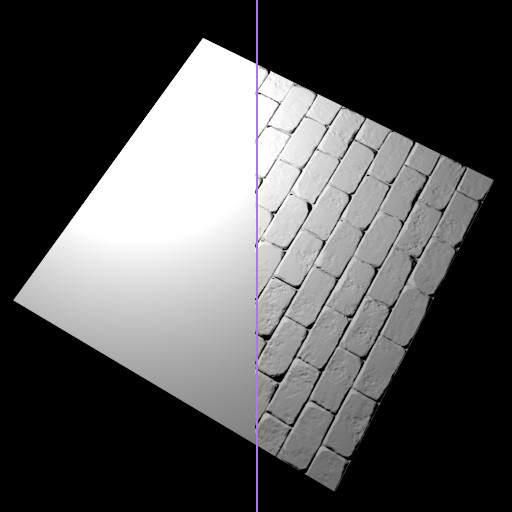
The shading normals feature is most prominent on the floor and the barrels. They greatly enhance the realism of the scene as it adds a lot of detail without the need for complicated meshes. The following picture shows the use of shading normals on a simple plane to create a brickwall appearance.
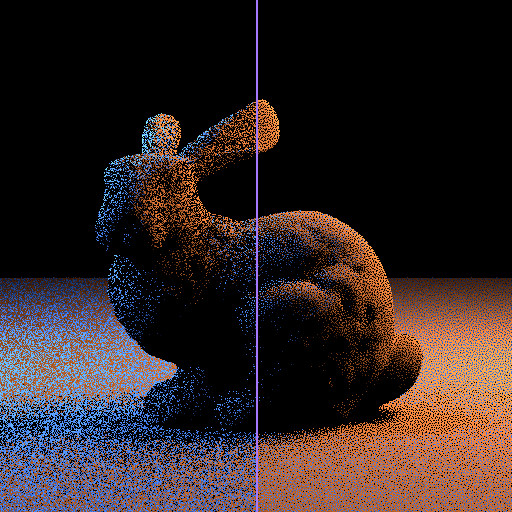
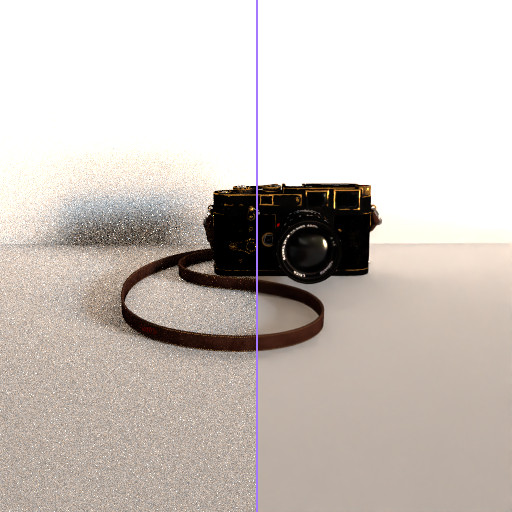
We acheived overall noise reduction by switching from an independent sampler to one that utilizes Halton Sequences. Further, by giving each sample an offset determined by a blue noise texture, we were able to distribute the noise in a way that is more pleasing to the human eye.
We integrated the Open Image Denoise library from Intel to our renderer. The result of this is noteworthy reduce in noise in the entire image. At first, we struggled with the documentation and how to correctly integrate the library in the lightwave framework. Furthermore we had an issue, where one of us was not able to integrate the library into their local system, so that lightwave could find the library. We solved these problems by trial-and-error as well as talking to peers with similar issues.
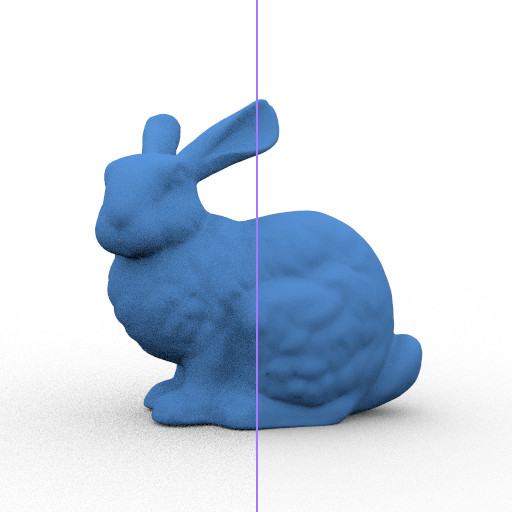
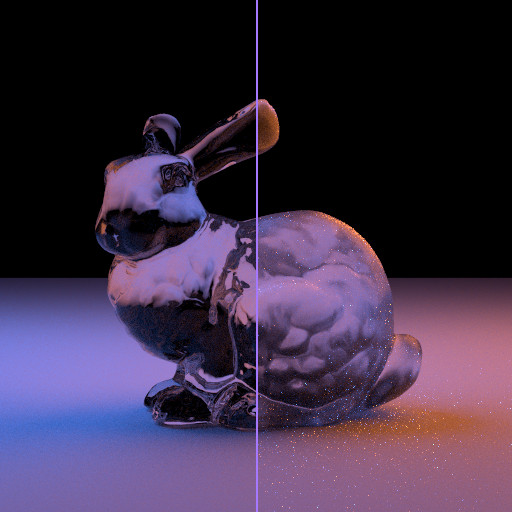
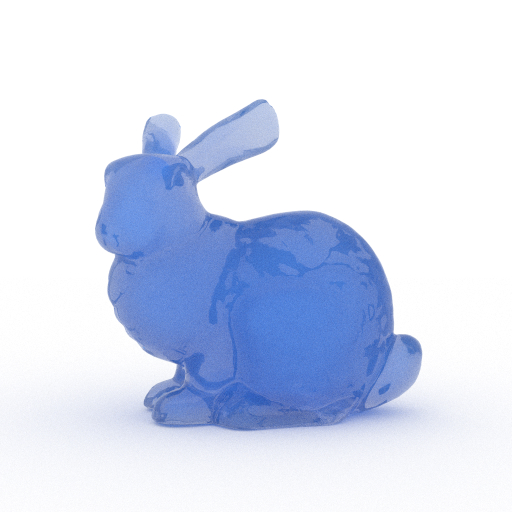
The rough dielectric feature is used in the lantern and clock model. The feature adds further realism as it shows the sturdyness of the thicker glass of these models. Here we largely followed the Microfacet Models for Reflection paper. The following picture shows a bunny model with a dielectric BSDF on the left side and a rough dielectric on the right side.
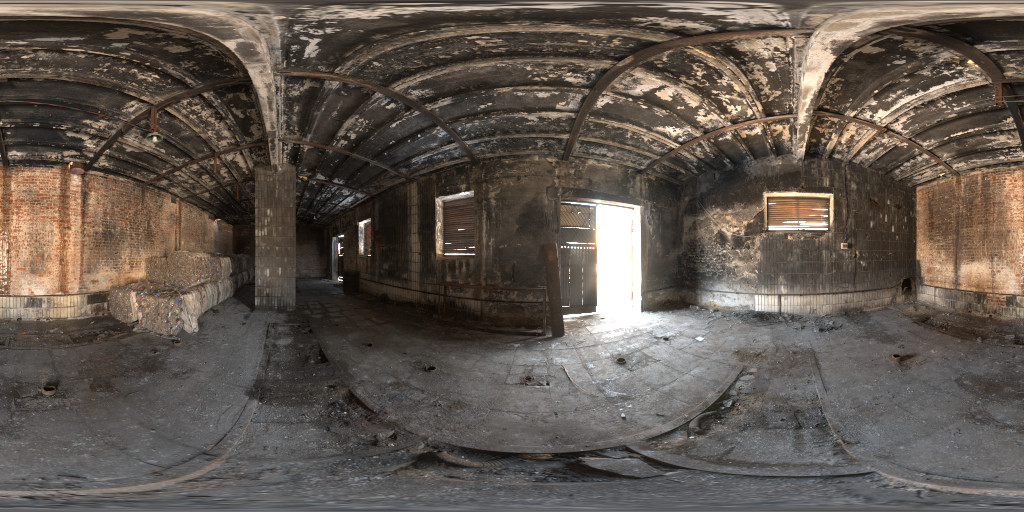
The main illumination in our scene comes from the environment map, more specifically from the door, whose reflection can be seen on the lantern. This gives our scene a very simplistic but realistic light source. However with basic totally random background evaluation, this would lead to a highly noisy image. Improved Environment Sampling generates a lot less noise, by sampling areas of the environment map with higher energy (in our case the door) a lot more often.
The improved area light sampling can be seen in the illumination of the luggage, the floor and the front left tire of the car. We placed a window outside of the visible scene with an area light behind it. This creates the visible illumination frame mentioned before. Using improved area lights leads to a more realistic frame compared to directional lights, since the edges of the frame are more vague, due to the different directions of the light. Furthermore, Improved Area Light Sampling generated less noise in the image, since we don't rely on either hitting an emissive shape or the background light by chance.
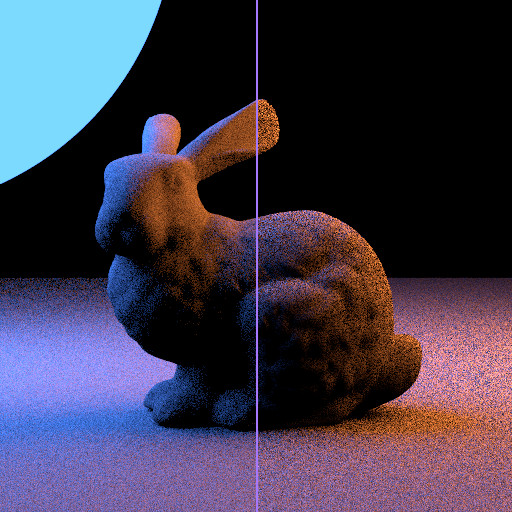
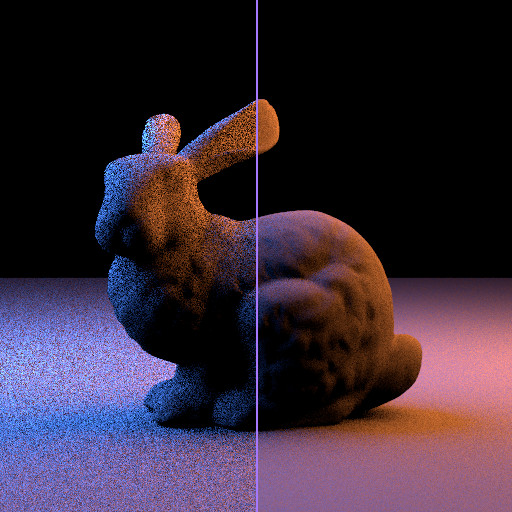
This is the pathtracer that we used to render this scene. With the default path tracer we just add the result of the two strategies (next event estimation and BSDF sampling) we use to intersect with light sources. Because both methods essentially have the same weight in this approach, some details might get lost in the process. Now using multiple importance sampling we can change those weights dynamically and get the benefits of both approaches.
Though the theory on its own is not that complicated, getting the PDFs used to calculate those weights right for every type of material and light took quiet some time.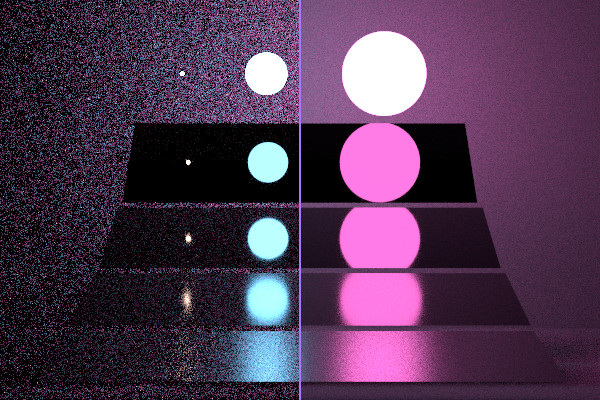
For homogenous participating media we first tried to implement the standard version described on PBRT with a transmittance function. However, we failed to do so and due to time constraints we decided to implement a more simplistic approach. We decided, based on the density of the medium, pseudorandomly whether we intersect with the medium or not and traced the path of the ray accordingly. A homogenous medium is used to render the dragon figure located on the barrel.
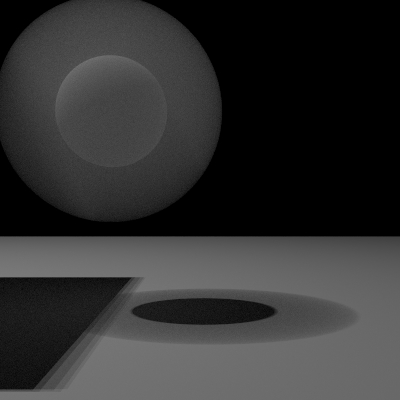
Alpha masking is the only feature not used in our scene.