Bokeh Filter
For a bokeh filter to work we need a thin lense model, so read that first if you have not done so yet.
A Bokeh filter is basically just something which covers your lense. In real photography you can cut out some shape into a piece of cardboard and then attach this cardboard to your lense. In combination with the blur effect of that the thin lense gives us, it will create lights that look like the shape you cut into cardboard whenever there are bright pointlights. There are a lot of videos about this so if you wish to see it in practice. It is a bit confusing to understand why this works like it does. One might expect to see the pattern only appear once, as it was only cut once in the cardboard. However, this is not what is happening. Imagine taking a flashlight und shining it through the cut out at different angles. You would see the star shape no matter what the angle is. So, with multiple such lights it makes sense to get the pattern multiple times at the sensor of a camera, too.
Implementing this feature in the lightwave framework was rather easy as we can just load an image texture and then change the color of the rays coming from the color accordingly. With this method you can also just put a green filter over your lense or anything else you desire. This however gives you darker pictures as you are loosing light, whenever the lense is sampled such that the texture occludes it. To counteract this we have an auto exposure algorithm which estimates the amount of darkening that is happening because of your filter and scales the color weights up by this amount. You can also add an exposure value to compensate manually. Setting this negative will use the autoexposure again.
The hardest part in implementing this feature is making a good setup to test it. That is you need a certain brightness of the lights and a certain distance and aperture to get it to work.
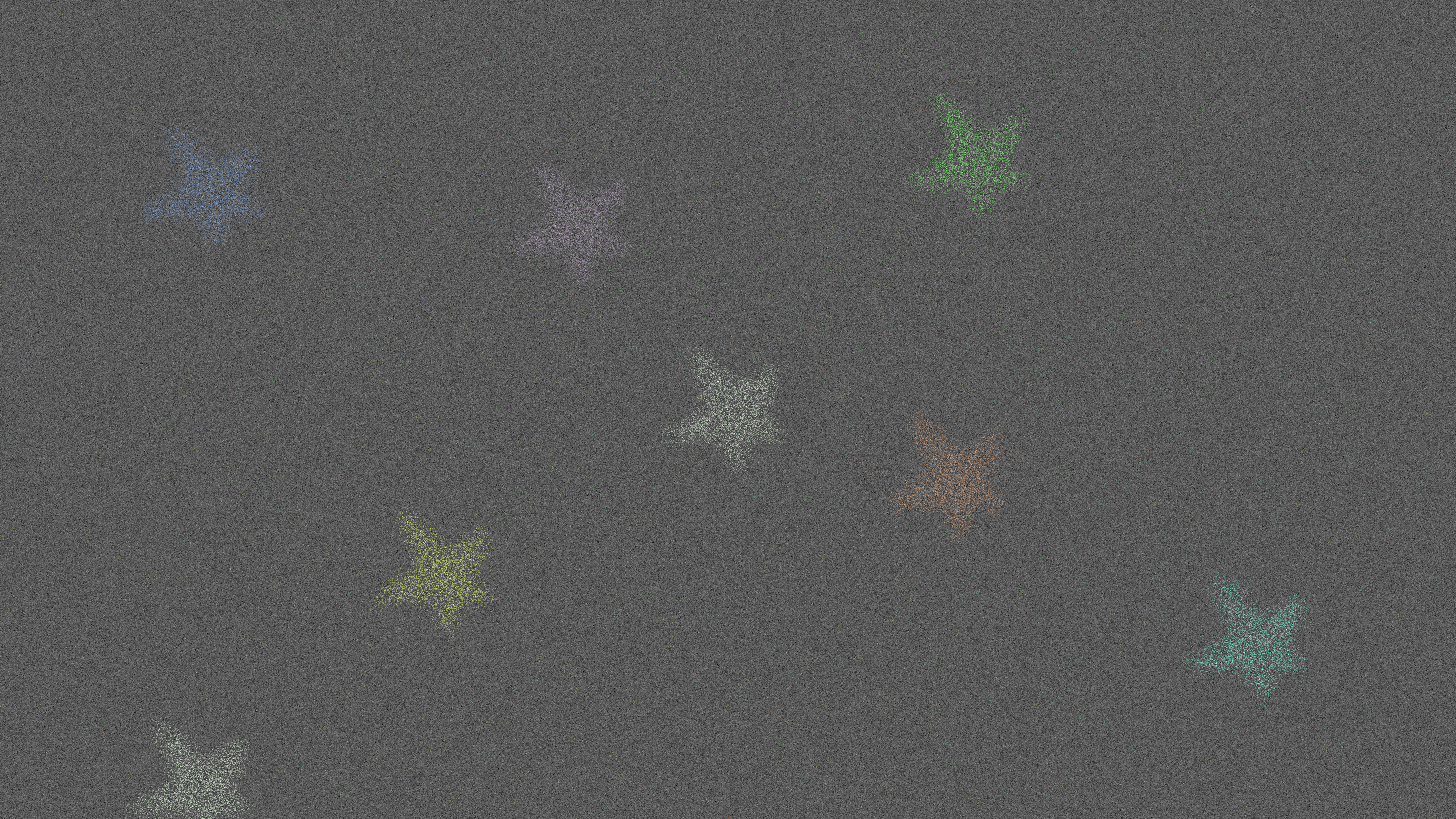

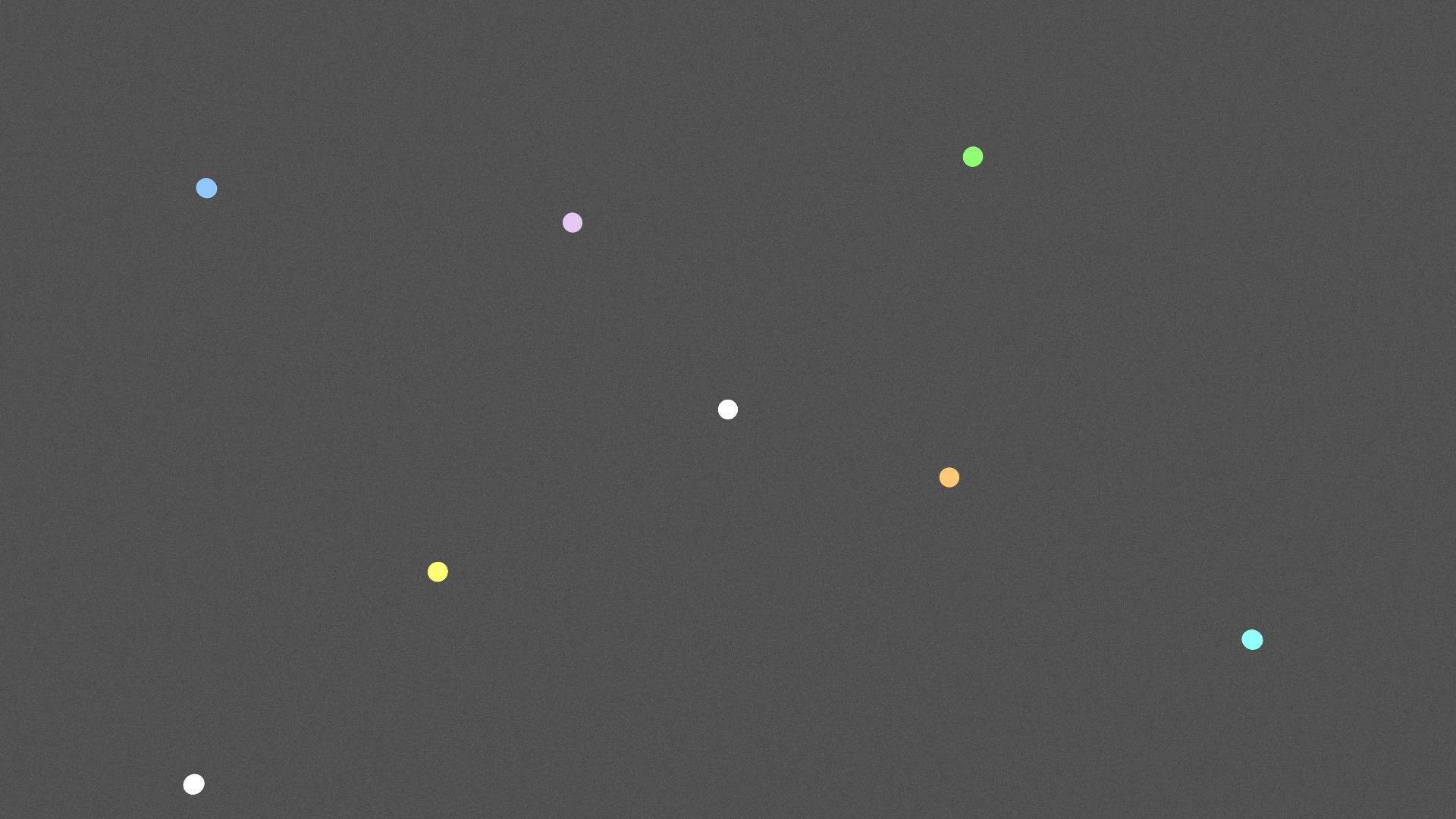
On the left you see the normal blur without a bokeh filter and on the right you see it with the star bokeh filter you see below. Additionally, you can see a picture of the scene rendered with a standard perspective camera.