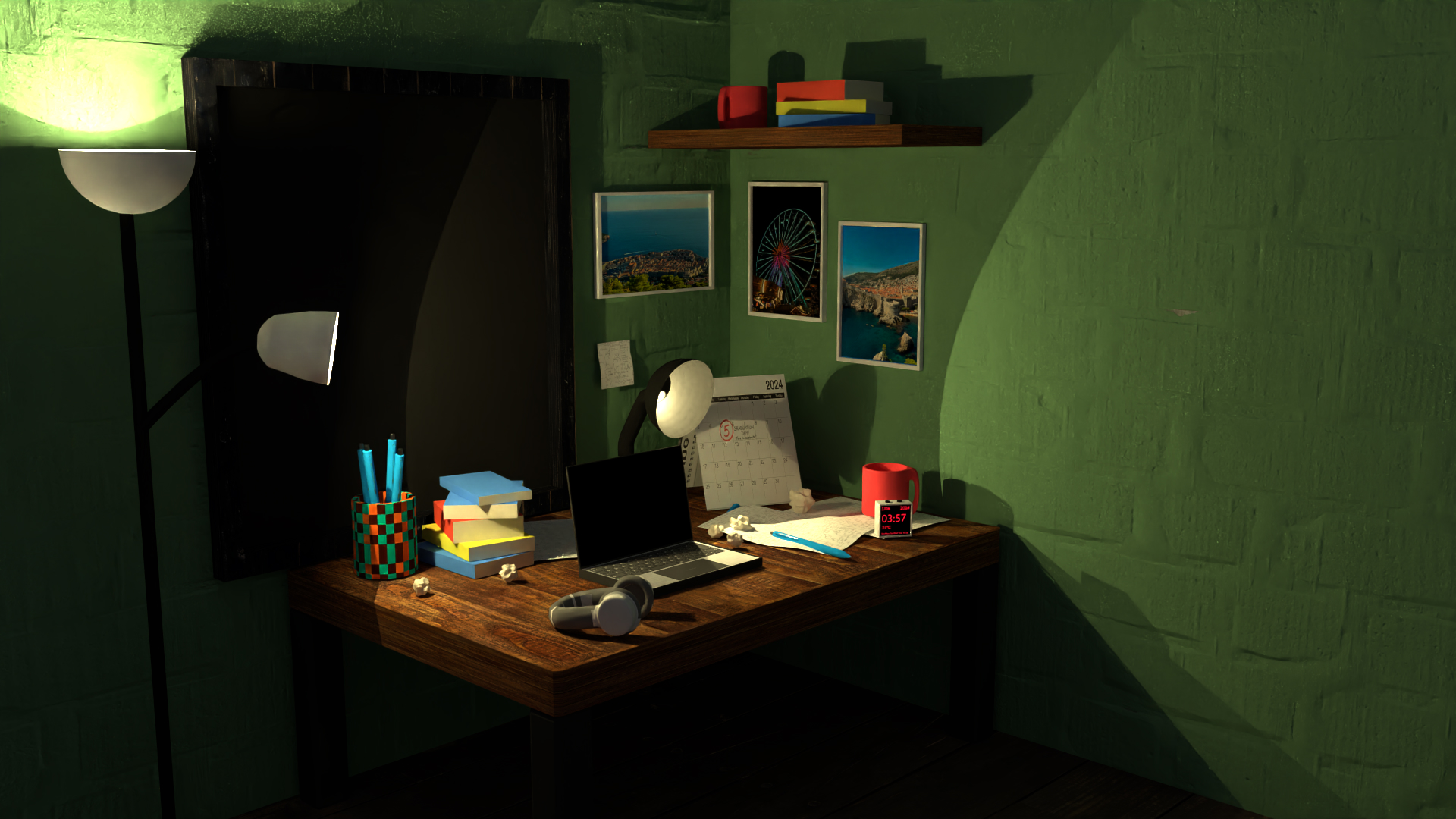
The Finish Line
Created by: Shashank Priyadarshi & Nguyen Duc Anh Pham
Created by: Shashank Priyadarshi & Nguyen Duc Anh Pham
Motivation: The project "The Finish Line" captures the stressful final moments before submitting the last few assignments. This image is a tribute to the hard work behind every degree. The messy desk reflects the student's busy mind, showing the intense effort needed to cross the finish line just before graduation.
The scene tells the story of the last push. By using a dark room with only one desk lamp and some lights, we wanted to create a feeling of being alone and focused. We want the viewer to feel two things: exhaustion (seeing how tired the student is) and hope (knowing they are almost finished). The messy table isn't just dirty; it shows how much work has been done over the semester. The warm light makes the desk feel like a safe, productive space. We wanted to show the reality of student life. usually, people only see the happy graduation photos with the diploma. We wanted to show what happens before that moment: the late nights, the stress, and the hard work. We wanted to capture the "struggle" that makes the success worth it.
A breakdown of specific technical and artistic features used to achieve the final look.
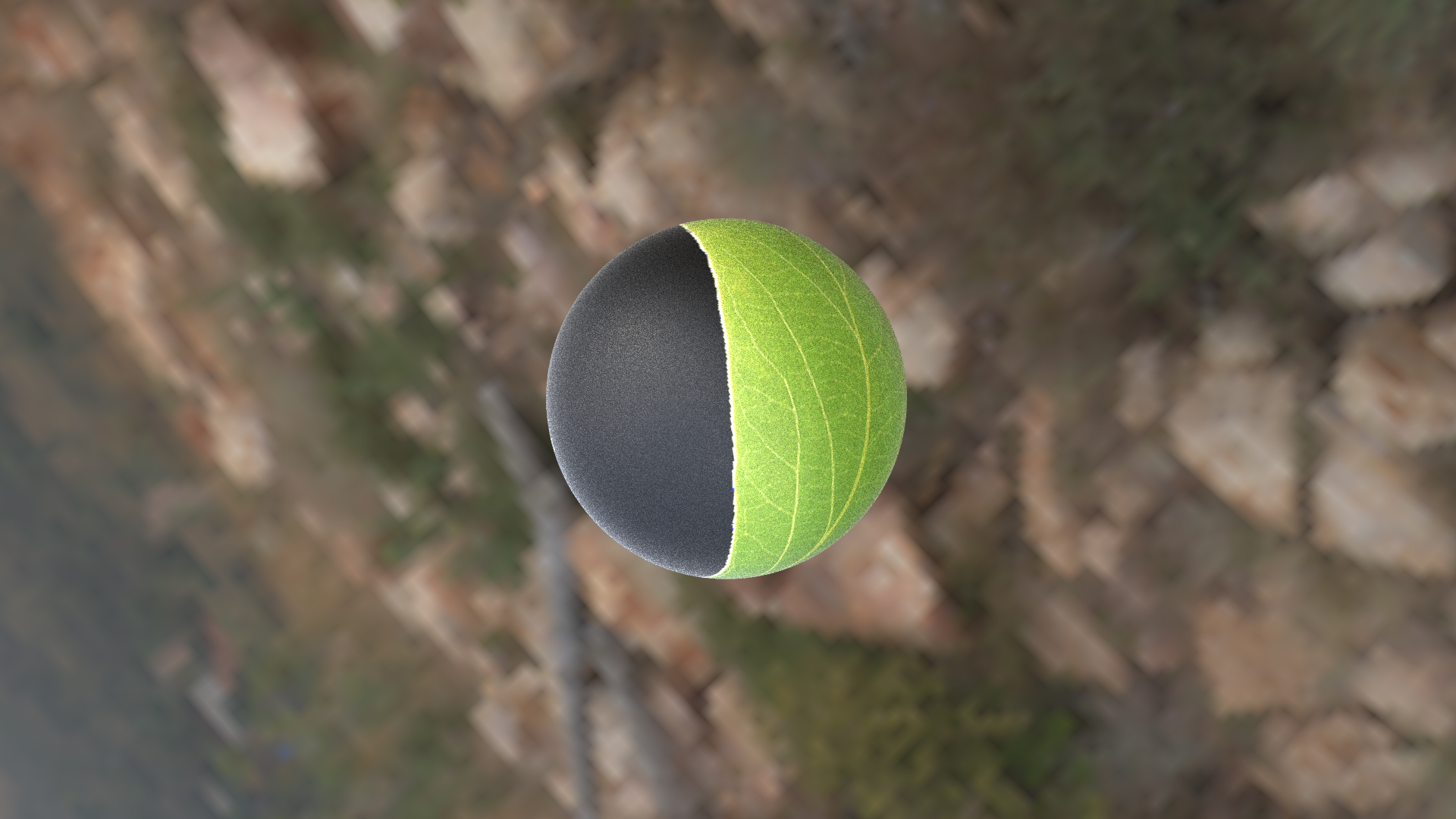
An efficiency technique that simulates complex geometry (like leaves) by using an alpha texture to stochastically dismiss ray intersections; if a hit is rejected based on the alpha value, the ray simply passes through as if the object were transparent.
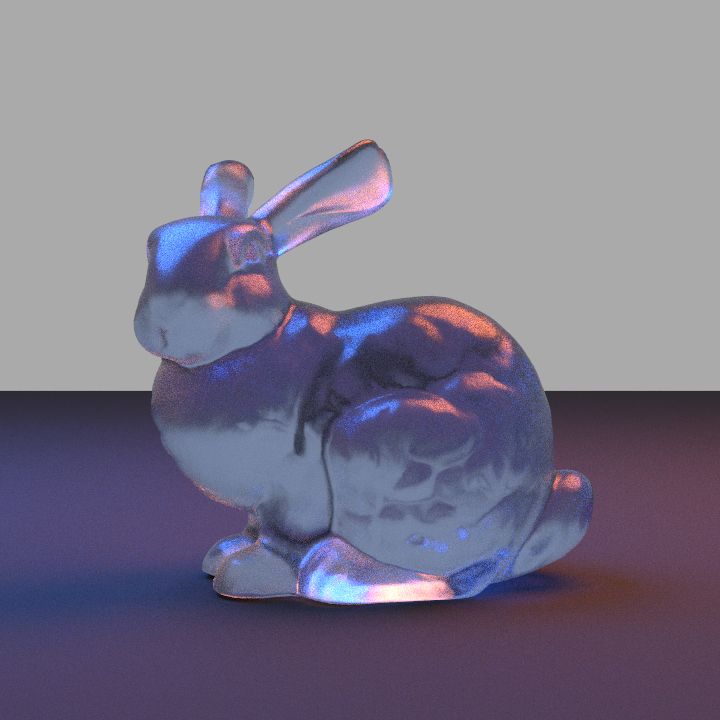
A post-processing integration that cleans up low-sample renders by feeding a denoising library auxiliary buffers (AOVs) like Normals and Albedo alongside the color image; this extra data guides the filter to preserve edges and details, preventing an overly blurry result.
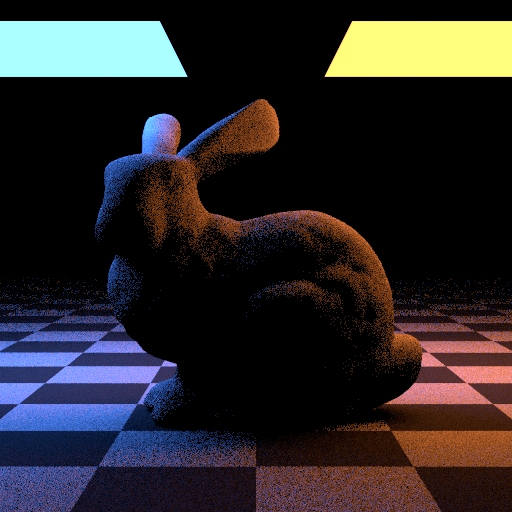
A low discrepancy sampling technique that replaces simple pseudo random number generation with stratified, quasi random sequences to ensure sample points are evenly distributed across arbitrary dimensions, significantly reducing noise and "clumping" compared to independent random sampling. A good render shouldn't based on random chance.
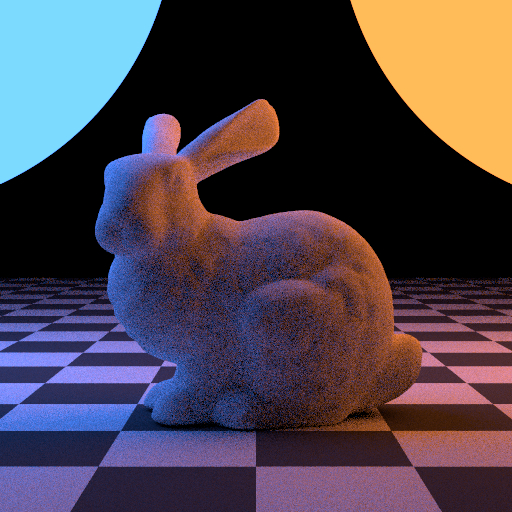
A variance reduction technique that replaces uniform surface sampling with Importance Sampling for shapes like spheres and rectangles, strictly guiding rays toward the emitter to minimize low contribution or zero contribution samples.
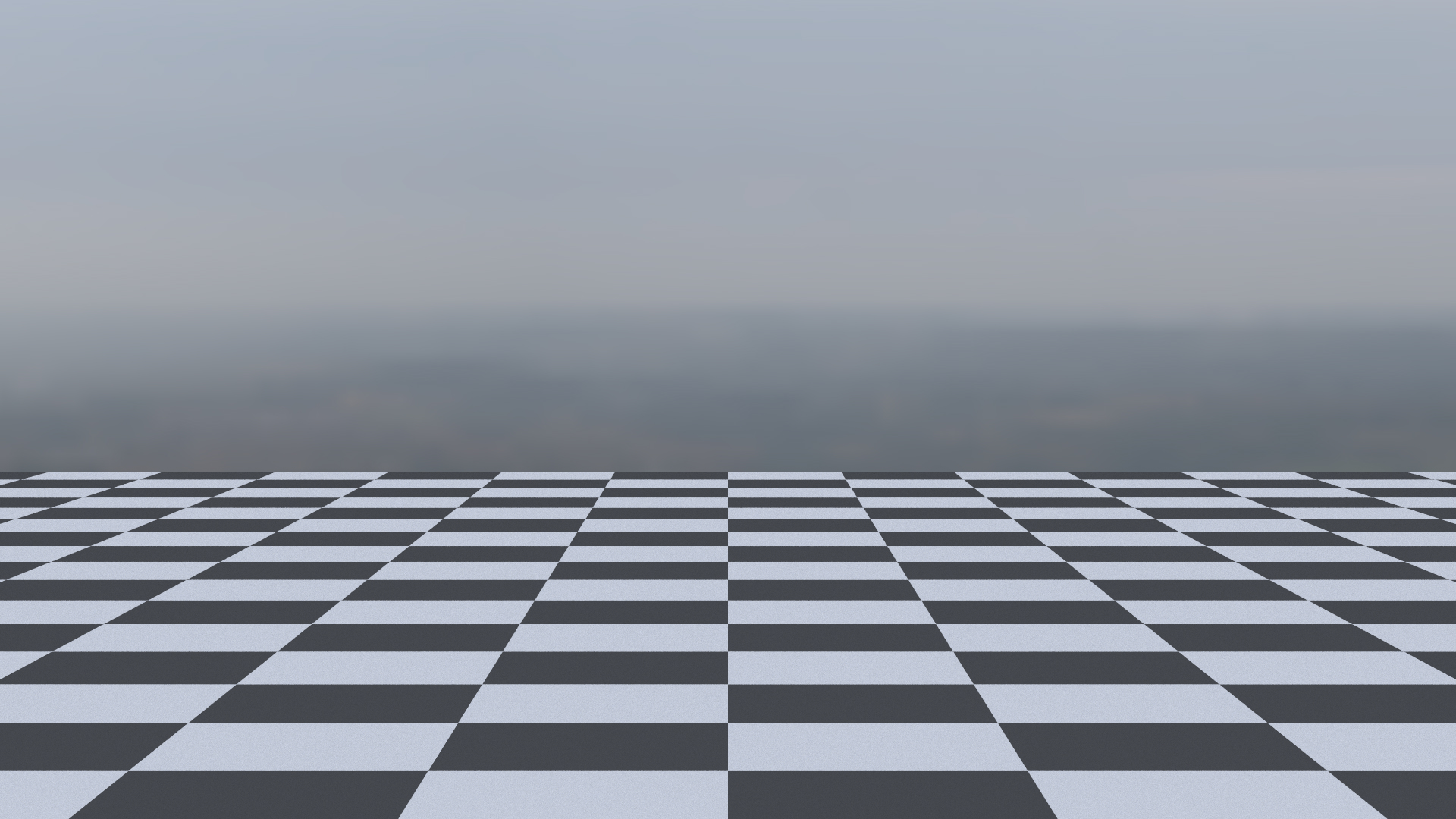
An enhancement to HDR background lighting that implements Next Event Estimation with importance sampling, prioritizing high-energy pixels (like the sun) over random points to significantly reduce noise and resolve shadows that uniform sampling would miss.
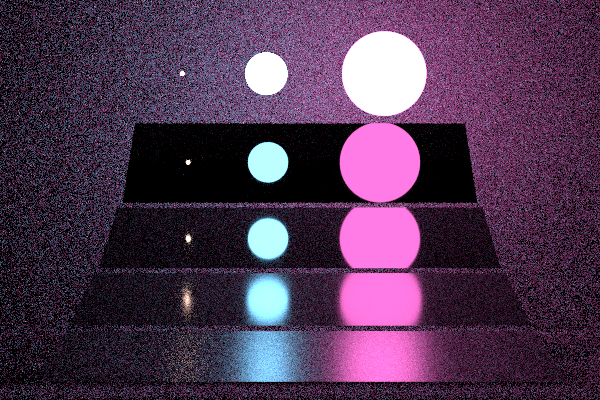
A robust variance reduction technique that performs both BSDF sampling and Next Event Estimation (NEE) simultaneously, merging their results using the power heuristic to automatically prioritize the more effective sampling strategy for any given lighting scenario.
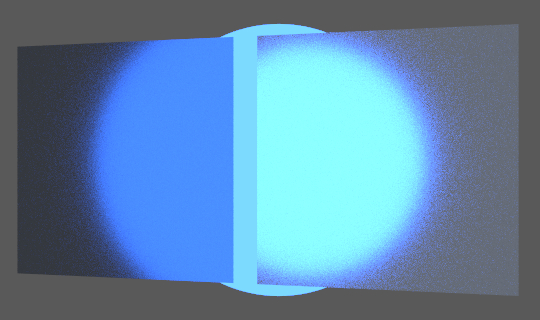
A microfacet BSDF simulating materials like frosted glass by combining dielectric refraction with surface roughness, requiring a specialized half vector Jacobian to correctly weight energy as rays bend through the microscopic surface.
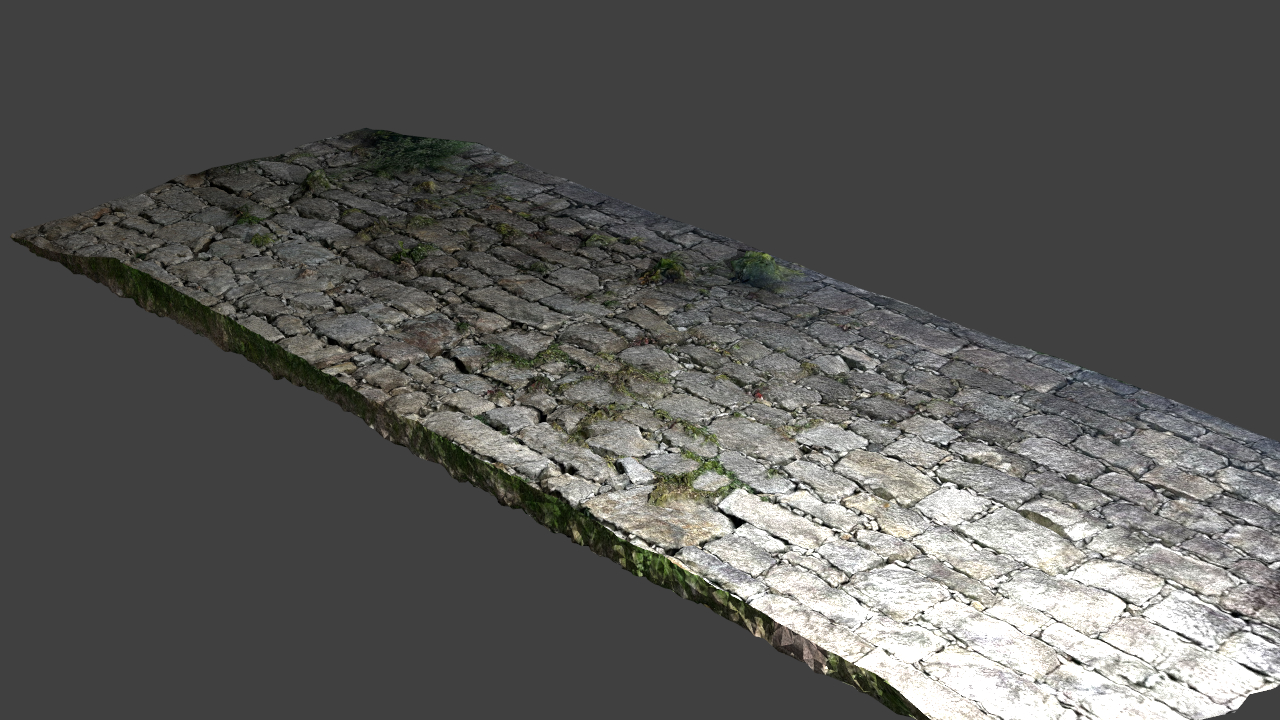
A texturing technique that replaces the geometric normal with data from a normal map texture during the transform phase, allowing you to simulate intricate surface detail on simple meshes without adding polygons.
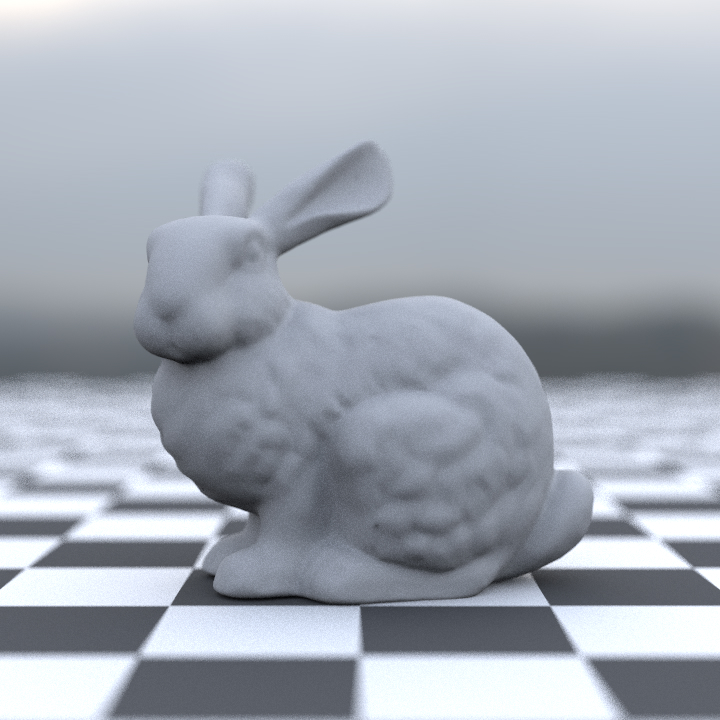
A realistic camera model that simulates optical principles (like aperture and focal distance) to produce depth of field, replacing the infinite focus of a pinhole camera with a lens that blurs objects outside the focal plane. Implemented an additional albedo integrator to feed to Intel's Open Image Denoising
A breakdown of how we went from an empty scene to the final image.
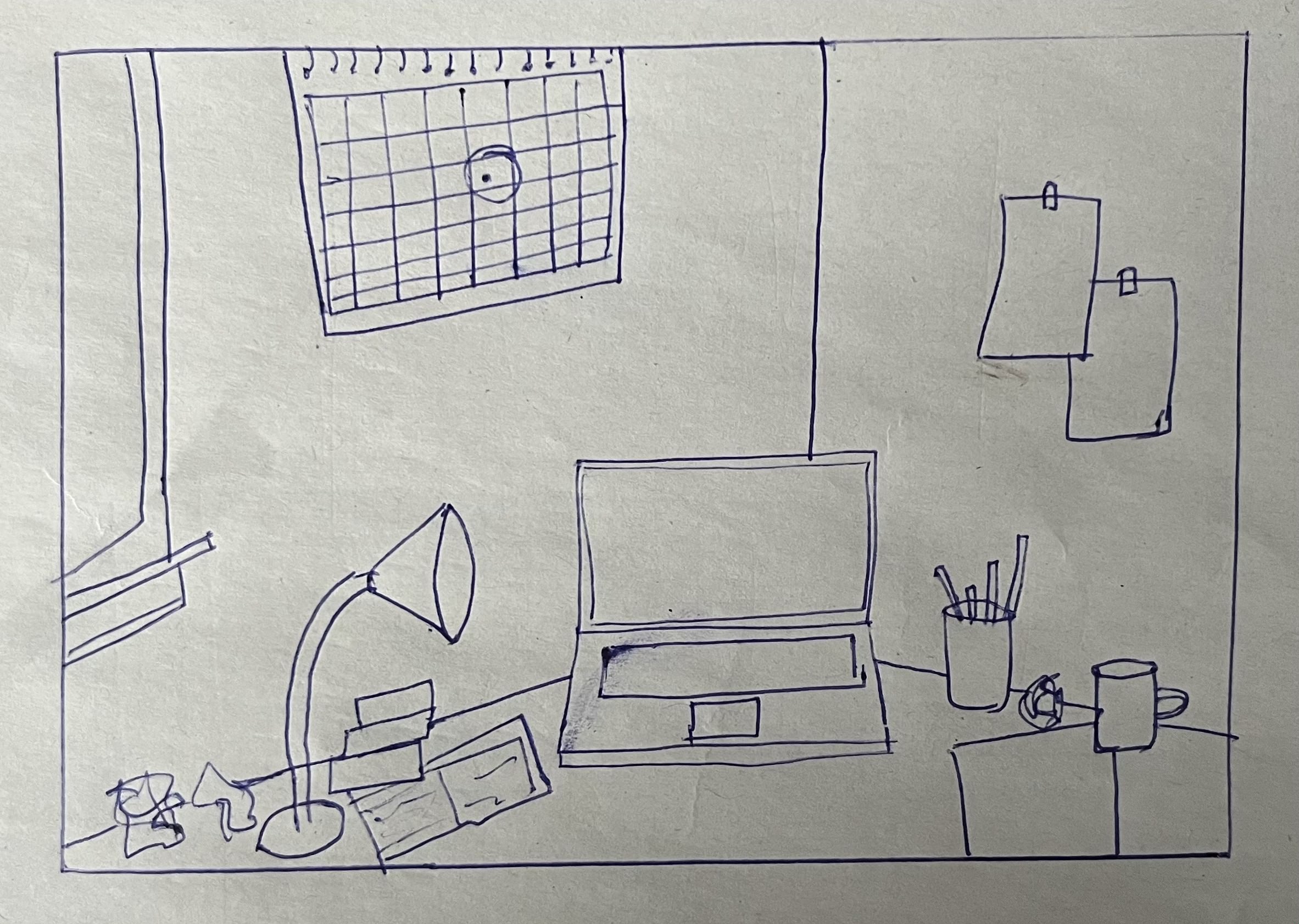
The initial idea was to make a study desk to show how busy students get during the final submissions.
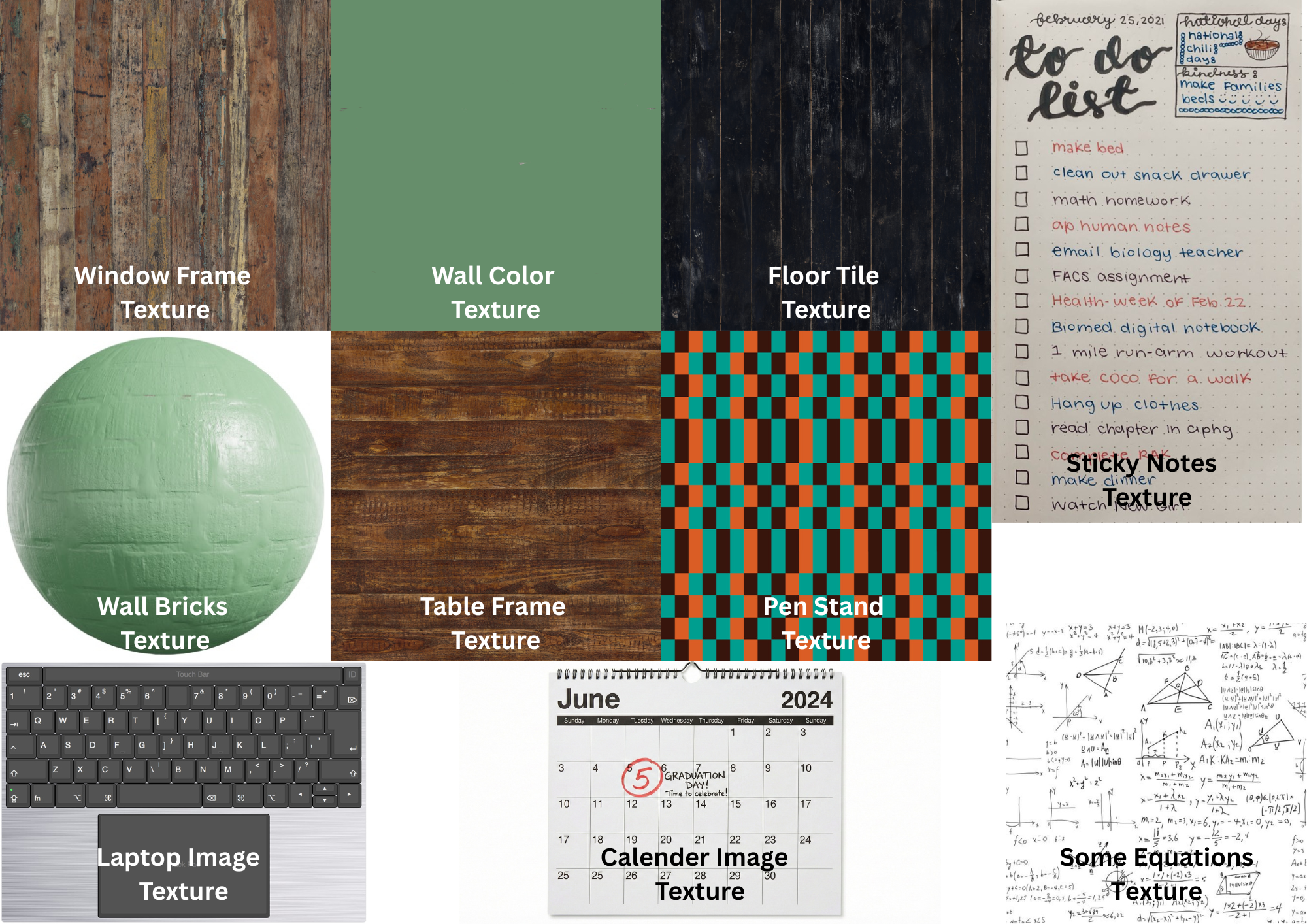
Collection of lighting and texture references.
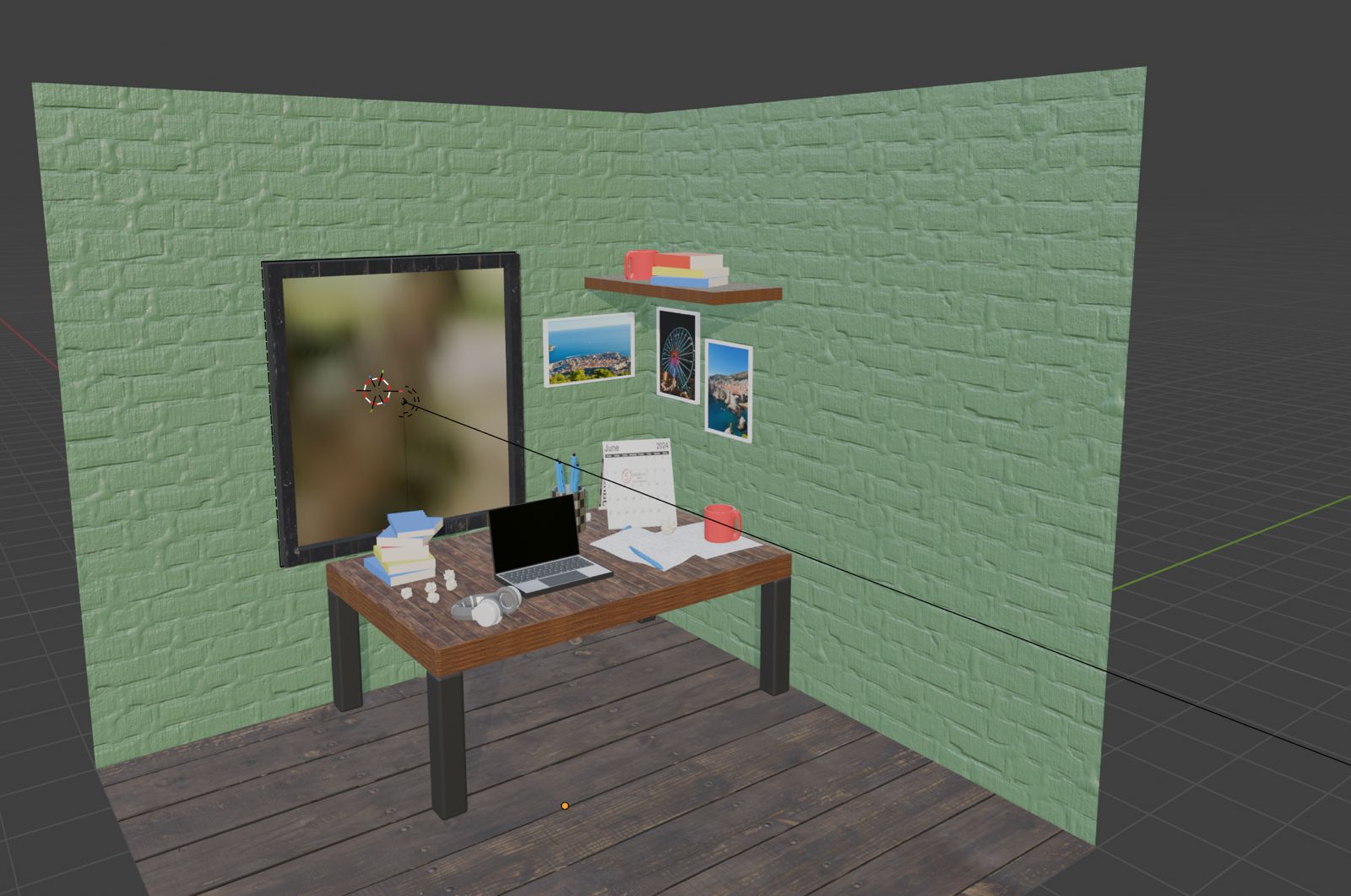
Here we were trying out several different textures for the wall.
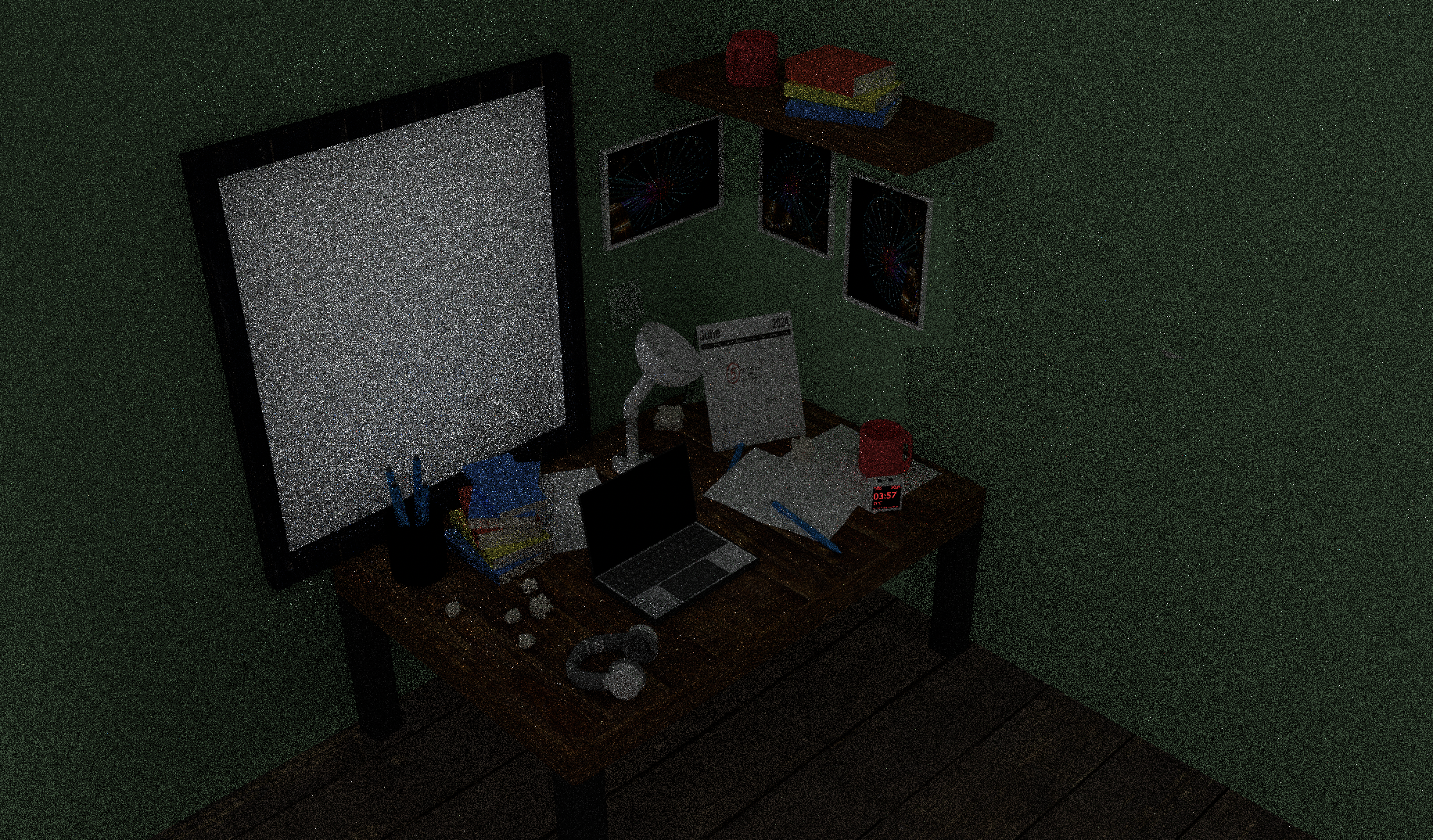
Over the time we have added mutliple lights like area from window and other objects such as Headphone, laptop, light, etc
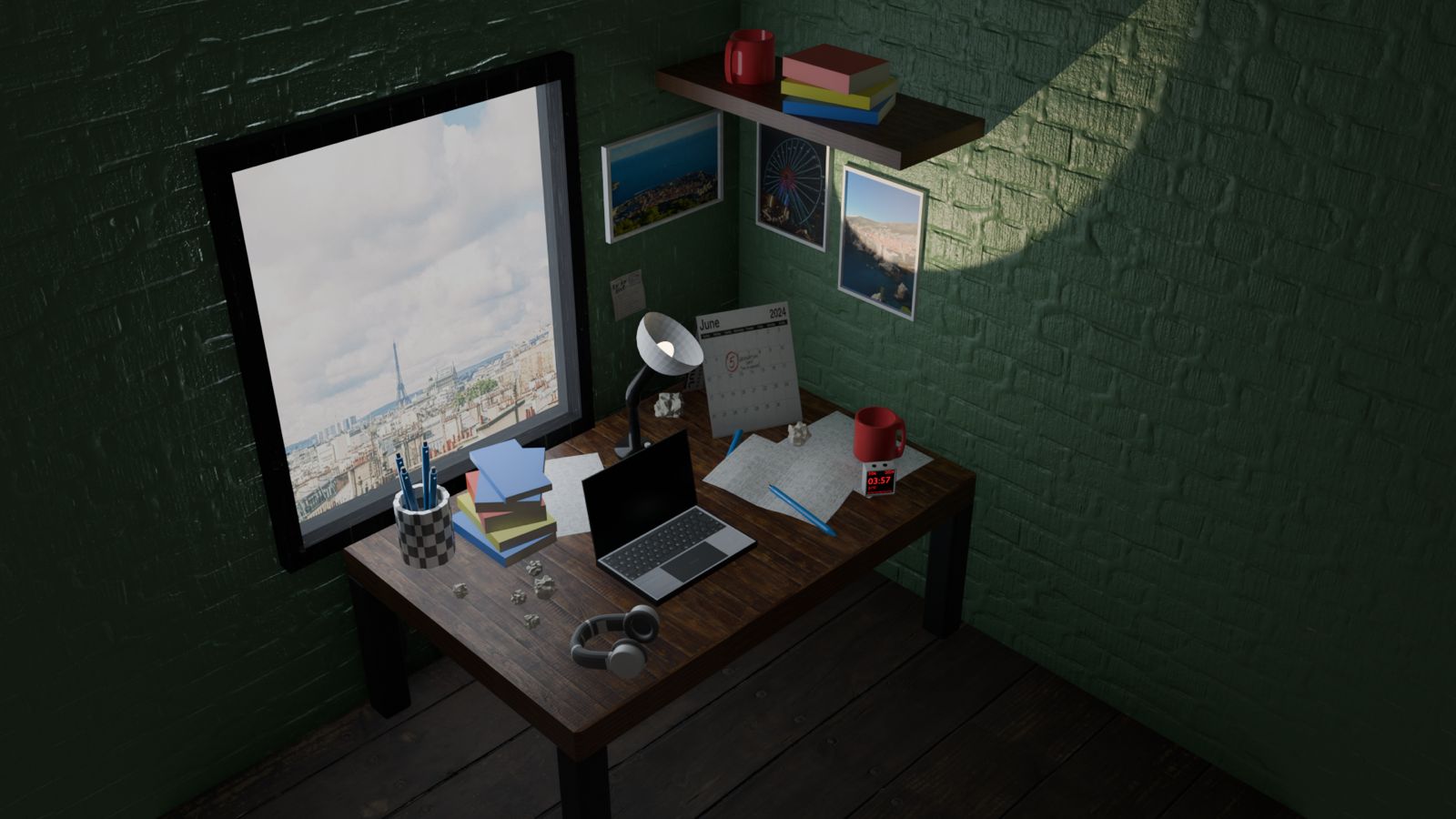
We tried to show some off light focus here
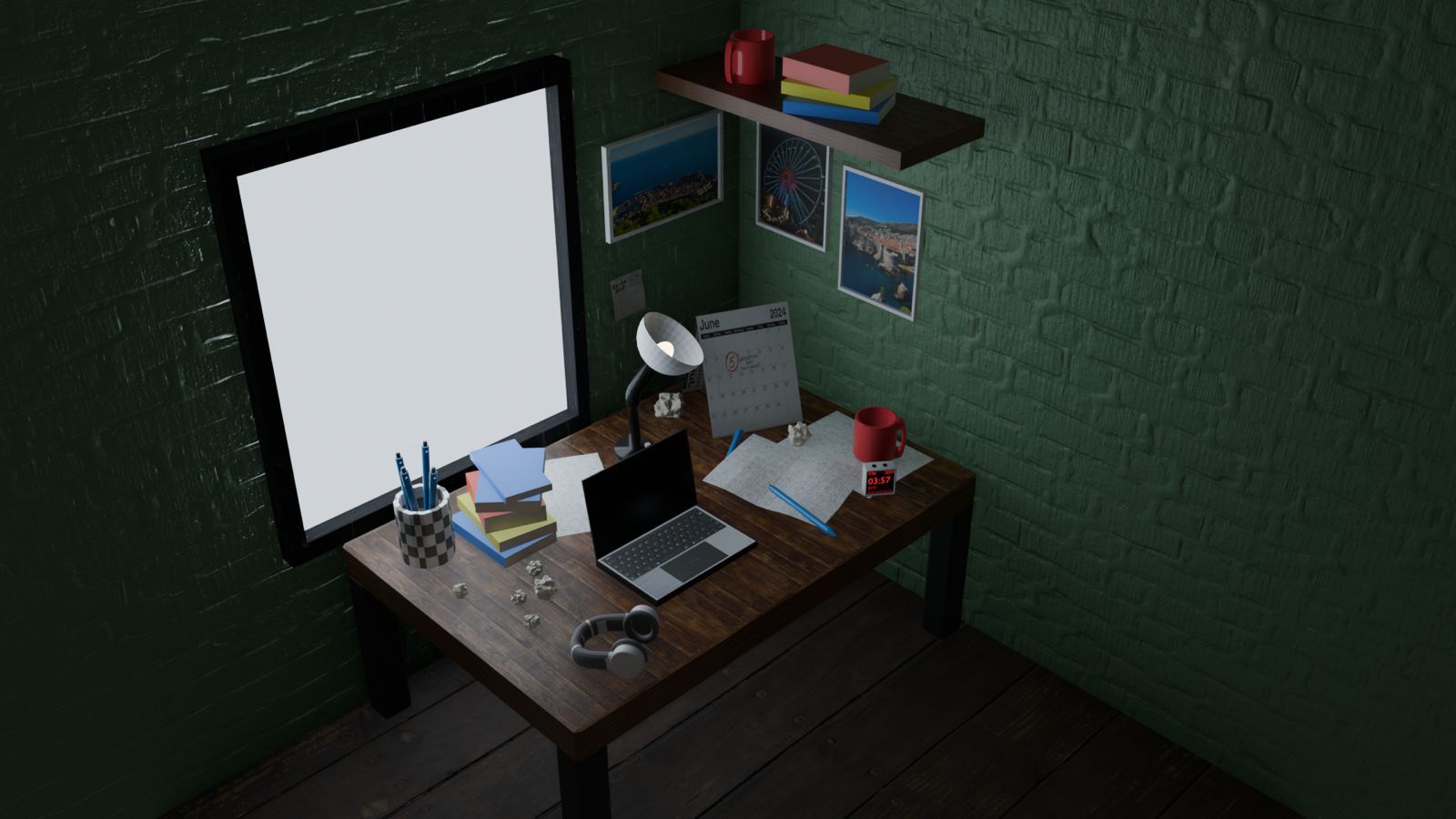
Here the window was little bluish showing the sky
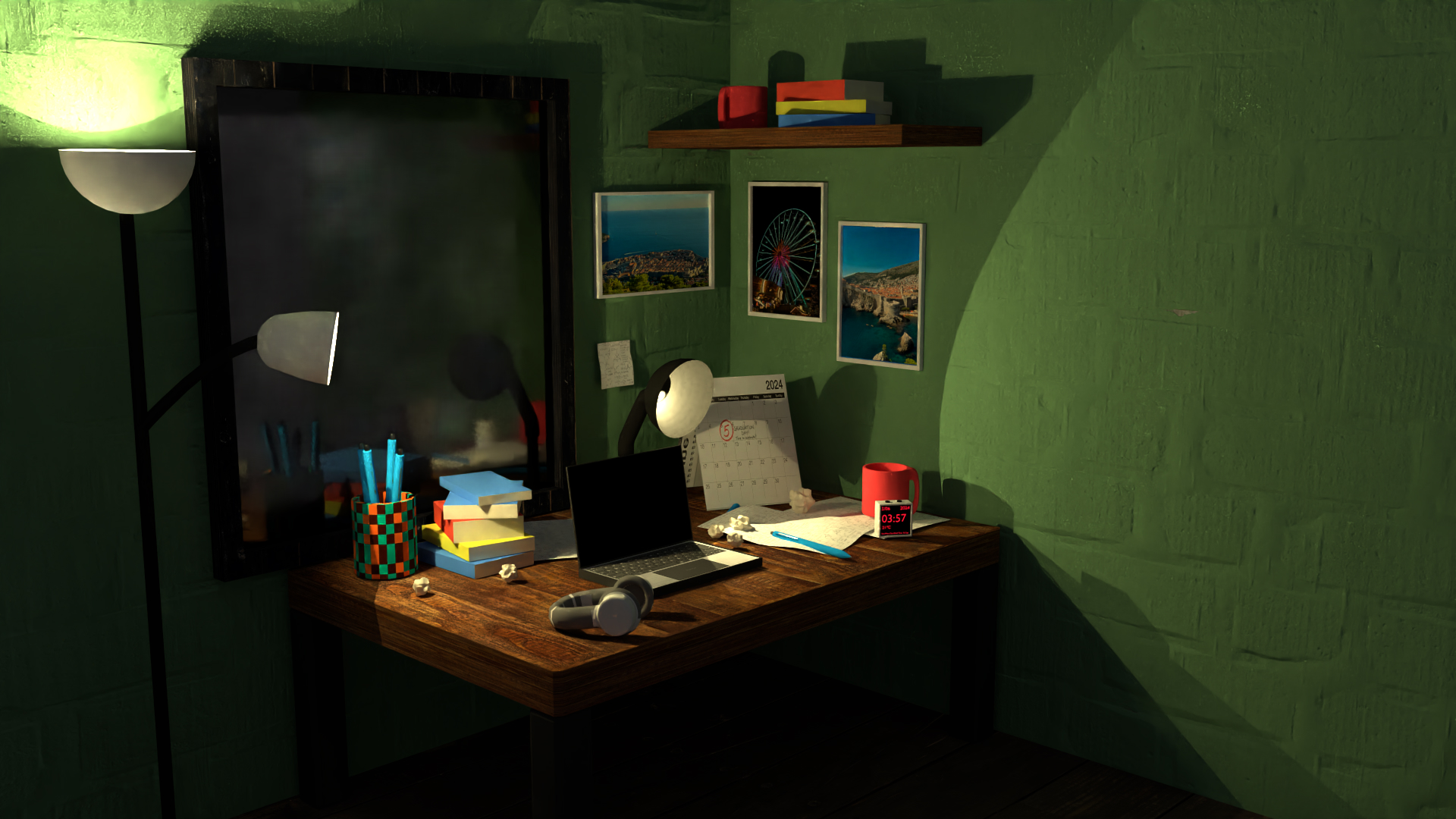
Night scene